
Against "Nietzscheanism"
The Supreme Problem of True Faith

I am not disturbed by “hedonists,” the pill-popping, dick-pumping, glizzy-gobbling gooners. I am bored of them. Porn addiction does not exist. What disturbs me is the cycle of avoidance that traps souls in fear, which hedonism is too impotent to overcome. The problem is not too much hedonism, but too much fear.
So-called “atheists” form a striver priesthood, worshipping the resume; the career; the social circle. Homo economicus is not passionate or hedonistic, but a slave to safety, comfort, and status. FOMO breeds conformism, fearing, most of all, the exile of being an “outsider.”
Neurotic nihilism critiques everything, leaving nothing but emptiness and despair.1 Hedonism fills the void with pleasure; neuroticism fills the void with fear.
Neurotic nihilism in the extrovert becomes the abrasive, anti-social sadist who makes life more miserable for everyone else around them. For introverts, fear leads to “people pleasing” — I’m so stupid, I’m so retarded, I’m such an idiot! A masochistic victim elicits sympathy and avoids conflict. They lack faith in everything, including themselves.
When I video chat with people, I weed out fear. I do not need more intelligent friends or richer friends; I need more loving ones. Fear and love are mutually exclusive.
Fear is overcome by worship and the embrace of self-sacrifice. Arguments for God never convinced me when I was an atheist. I don’t defend God’s existence, but pursue faithfulness as the ideal virtue.
Faith opens me up to vulnerability, mistakes, errors, and critique. To hold something as sacred exposes the potential for disillusionment, disappointment, humiliation, and loss. It is safer to retreat into a belief in nothing. Absolute atheism risks no embarrassment, but it also risks no love.
The idealistic atheist, wokely protesting for Palestine, is preferable to the “lukewarm” ones who believe in nothing and no one. Many atheists have ideals and heroes, Gods in all but name, but hate the word “God” because they associate it with the Bible, Orthodoxy, superstition, dogma, and conservatism.
The Supreme Problem
Deep leftism is a revolution, with an earnest heart, for the salvation of the one true universal faith.
How could something as banal and boring as liberalism ever inspire true faith?
That is the supreme problem I am attempting to solve. It is the only problem worth solving.
The heroic ideal is being nagged-out of existence in our current crippled liberalism. Liberalism is Rick and Morty, Dave Smith, and Joe Rogan: rule by comedian. Our priest class is “just asking questions,” snarkily tearing down authority, but never offering something to believe in. Even Trump, the greatest God of our age, is a comedian.
Liberalism is not defanged; it is the process of defanging, making all of us into toothless, fearful old women. Rather than proposing anything positive, it justifies itself by the avoidance of apocalyptic visions of AI-Hitler: thou shalt not.
But no one really believes in AI-Hitler; they just want to piss off the woke-scolds. Anti-liberalism is a negation of a negation, an angsty rebellion without a soul of its own. Only a true faith can save liberalism from itself.
ABSOLUTE TRUTH
Nietzsche exposes the rot at the heart of our civilization. Our job is not to be satisfied with the table he has set, but to go beyond it.
True faith requires a belief in absolute truth. This is where I depart from Nietszche.
I have not “read” Nietzsche’s books, but my favorite aphorism is this: never critique someone you do not respect. If someone is unworthy of respect, they are unworthy of critique.
I was sent this Nietzchean essay from someone I respect, but I fiercely oppose this sentiment:

What I respect about wokeness is that it contains absolute faith in objective moral truth, even if it does not admit this. In wokeness there is fanaticism, a priestly power of will. Rather than condemning wokeness, I would rather condemn “Nietzscheanism.”
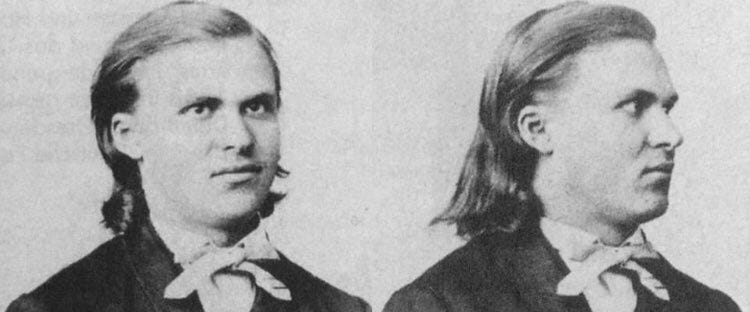
With regard to Nietzsche the man, I have no revulsion. When he proposed his post-truth ideas (now considered “post-modern”) he was innovative and original. Like Darth Vader or Lucifer or Faust, to be excellent in evil reveals a potential for good. But everything derivative of Nietzsche — “Nietzcheanism” as a system — delays and avoids the problem of true belief.
Nietzsche foresaw this, like a doctor detecting cancer years before its symptoms began to manifest, unable to halt its progress. To announce the cancer now, in its final hour, is not prophetic but hysterical and unhelpful. It is better to say nothing than to shriek, in a shrill cowardly cry, “the West is dead, it’s so over, I’m so blackpilled…”
I have more respect for communism and Nazism and every other “ism” than Nietszcheanism. Nietzsche presents us with a series of problems which cry out for solutions, a void which must be filled with fresh belief. One is not meant to remain a Nietzschean — he presents a problem to overcome.
My disagreement with the Nietzscheans is that they separate truth from meaning. They claim that “meaning is something we must create; truth is impossible and a fool’s errand.” But for the true believer, meaning and truth are one.
To reduce truth to the subjective is to make one’s self God. Solipsism precludes the possibility of self-sacrifice for the greater good. Only by worshipping something higher, a truly Supreme All-Divine, can the greatest strength be summoned.
PURE FAITH
For the atheist, renewing faith is an impossible task, since one cannot go backwards in history, only forwards. I agree with the sentiment, but disagree with the definition of God as killable or historical or “past tense.” God is immanent, ever-present, above history and myth. He is the eternal source of truth, which can never be marred by gossip and rumor, even those written down thousands of years ago.
The reduction of God to a series of commands and rituals leads to the childish temper-tantrum of atheism, which abandons faith when a particular doctrine fails us, as they always inevitably do. The attempt to capture His form and character, reducing Him to a genie in a bottle, is the first form of atheism.
Dogmatists want to put God on a leash, makin Him definite and controllable. Atheism takes dogmatism to its logical conclusion: the negation of God entirely in favor of pure doctrine (wokeness).
Pure faith regards God as ineffable, unconditioned, unlimited, undifferentiated, and uncontained.
Faith is often considered a conservative trait; it is liberals who are faithless. But this misunderstands the meaning of faith; it confuses appearance with inner substance.
IDENTITY
Faith DEMANDS self-sacrifice, not only in physically risking life-and-limb, but at the level of identity. One who is faithful adopts a new vision of themselves.
Who am I? We can be quantified through personality quizzes, but these never provide telos. Whereas psychologists reduce each individual to a basket of pathologies to be medicated and neutered, teleology provides a positive aspirational identity which demands the destruction of the self for the fulfillment of prophecy.2
Purity of faith limits and sharpens identity, like a laser, toward one particular goal. Atheism is more difficult than it first appears, because everyone has a weak or implicit identity. These flaccid identities involve limp faith in mundane “pragmatic” values, like the God of money and resumes, or the demon of social exclusion and cancellation.
Conservatives obscure all of this. “Conservative” faith is defined by going to church, repeating the lines that everyone else says, standing up and sitting down in the right order. The more Orthodox and dogmatic we become, the more that faith is redefined to mean “conformity to authority.” But dogma is the exact opposite of true faith.
Faith is purest when it is alone, opposed by the forces of conformity. Faith appears most strongly against the world, not in the presence of community or backed by scripture. Noah and Lot defy convention and set out on their own path.
Still, faith is not pure contrarianism or world-rejection, but a positive telos, an ideal. Opposition to the world for its own sake is just another brand of neurotic nihilism, which opposes everything and proposes nothing. It is not sufficient to oppose the world; one must be orthogonal and outside of it. Only a positive vision can animate true faith.
CONCLUSION
Whether something is “truly Nietzschean” does not concern me. His philosophy is not systematic, so it can be redefined via semantic squabbling to be compatible with anything. My main gripe is that self-proclaimed Nietzscheans frequently say things like “there is no such thing as objective truth.” This lack of true belief is hollow and self-defeating, and I want nothing to do with it.
The telos of politics and religion is to discover true faith. I have “faith in faith,” that something must emerge by the necessity of war and crisis.3
Ethnogenesis occurs again and again, in the harshest and most unforgiving conditions. The worse things appear on the surface, the more pressure is applied to the emerging diamond.
This is the great adventure of our time: not cleaning your room, getting a girlfriend, having children, or even “saving western civilization.” All of these problems are small and selfish when compared with God.4 What matters is not a 1,000 year Reich, the preservation of a race, or the elimination of poverty, but the immanent, dynamic, living presence of true belief. The kingdom of heaven is here and now, within us, waiting to be revealed.
The right-wing clings to Second Religousness, the revival of anachronistic buildings and hierarchies. The conservative, seeking a crutch for his loveless marriage, falls back upon a comfortable lie, convincing himself that his faith is the same as his ancestor’s. But this is an insult and blasphemy. Rather than seeking to emulate ancient forms, I demand an eternal faith.
Thanks for reading.
My ability to continue this project is due to the generosity of my supporters. Paid subscribers get access to:
700+ paywalled articles
Fresh article requests
(100 words per $1)
(up to $10,000 for a million words, [Mr. Beast torture chamber challenge] in which I take green tea and nootropics [Alpha Brain] and hire an assistant to force me to write 14,000 words a day for 71 days straight)
Early access to drafts
Access to the elite editor’s group
If you are not a paid subscriber, remember that every comment and re-stack helps improve the visibility of this article in the algorithm. Hitting “like” helps me understand what works and motivates me to keep going. Thank you.
I hedge myself with flamboyance, cynical arrogance, cutting sarcasm, caustic opposition, and contrarian smugness, agreeing and amplifying to the point of satire. The entertainment economy sucks me into the role of the court jester. Even when serious, I’m still outragerous, like Howard Stern forcing siblings to kiss. Underneath that shock-jock exterior, the kissing siblings remind me of the love I desperately miss.
In a polytheistic system, different Gods exist in cooperation or competition with one another.
I am a Platonist, so I believe that this faith already exists as a ratio between the elements of tension latent within the moment. Giving this ratio a definite form is difficult, if not impossible, given the speed at which these elements reveal themselves dynamically.
Perhaps the pursuit of great adventure can include or be contemporary with lesser, more individualistic goals, but that does not change their relative importance.