
Why I hate Rick and Morty.
Horror-Humor and Sexual Comedy.

I despise Rick and Morty. I feel similar disgust when women flaunt their sexual escapades in my presence, akin to a “fart joke.” This isn’t because I prefer celibate women. I don’t care if a woman is a prostitute; but I insist that we take sexuality seriously, and be discreet. I am not concerned with physical chastity, but with presentation. It is a matter of class.1
In my hatred of Reddit humor and fart-flaunting females, I seem conservative. Yet ideologically and metaphysically, I diverge deeply from the conservative theory of sexual liberation.

Conservatives, like progressives, posit a linear history. Progressives claim that, since the Reformation and Enlightenment, things have gotten uniformly more “liberated”; conservatives claim things have gotten uniformly more “degenerate.” Yet this binary ignores the libertine spirit of the 18th century, later constrained by the reactionary Victorians. Furthermore, neither of these linear models explain the sexlessness of “wokeness.”
Rather than dividing history into a binary, I use the Hellenic four humors to parse the last 500 years of European history into four overlapping periods of sex and comedy. This progression is Spenglerian in reflecting individual maturation:
In the sanguine mode, teen sex (“puppy love”) is superficial and unadulterated, without complications or strict monogamy.
In the choleric mode, man realizes the need to compete and dominate through strength, anger, and violence. Otherwise, the woman will humiliate and abandon him. Honor, duty, and loyalty become threatened tragic virtues.
In the phlegmatic mode, the masculine “front” fades away. Sex is not carefree, fresh, or new, but also not the “rape” of the hyper-masculine predator. It becomes a rational and routine affair, a social-public bond held over years. As the couple plan to conceive, sex becomes a mechanical, biological, utilitarian, and scientific project, tracking ovulation cycles.
In the melancholic mode, sex becomes tortured and self-hating: the trans, incel, femcel.
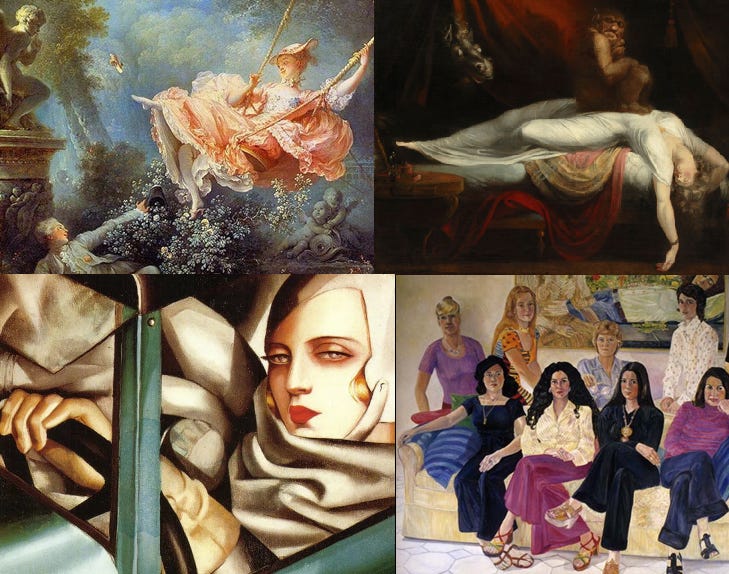
sanguine CUCKOLDRY.
Ostentatious, flamboyant, performative, hypocritical. Defined by Rococo and Baroque. Beginning as early as Machiavelli’s The Mandrake (1524 - 1790)
Sanguine cuckoldry develops out of the tension between Renaissance humanism and bourgeois morality. It reaches its height in the late 18th century, before being destroyed in the American and French Revolutions.
As aristocrats left the battlefield, replaced by professional soldiers or mercenaries, they needed something other than war with which to distinguish themselves from “commoners” — meaning, the rising merchant class developing in northern Italian cities and through Henry’s dissolution of monasteries. The distinctions which arose represent a social “arms race” between aristocrats and bourgeoisie. As both attempted to prove their class, the result was a frivolous, formulaic, and reputational ordeal of civility; hilarious superficialities and “peacocking.”
Sanguine cuckoldry wasn’t a period where morality was absent, but where it was constantly threatened by a new genre of humanistic, Enlightenment thought, represented by Benjamin Franklin and Voltaire.
In comedy of manners, the superficial veneer of the upper class is revealed. The comedy of manners was most pronounced under the conditions of class anxiety, such as during the Baroque and Rococo era.
For a modern example of the comedy of manners, see: What About Bob? (1991). Bill Murray plays a mentally-ill oaf who stalks his therapist, Dr. Marvin. Dr. Marvin, supposedly a master of emotional control and regulation, cannot figure out how to handle Bob. In the end, Bob charms ends up charming Marvin’s family, marrying the Marvin’s daughter, and Marvin goes insane. What About Bob? represents a transitional period in the history of American psychology, where the old Freudian school was being replaced by a new “anti-Freudian” school.
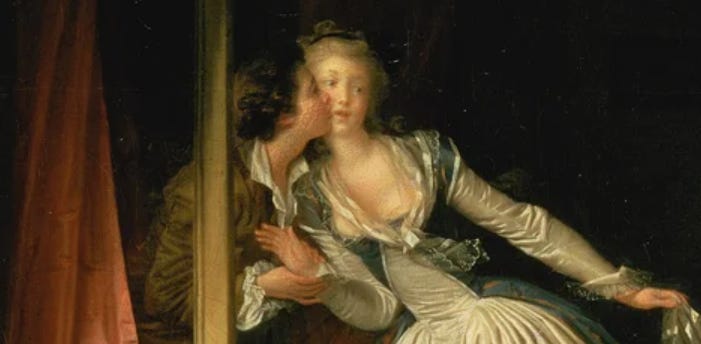
choleric VICTORIAN.
Patriarchal, violent, tragic. Defined by Sturm und Drang, Gothic horror, and Neo-Classical architecture. Beginning with Julius of Taranto, ending with Lovecraft’s first story. (1774 - 1896)
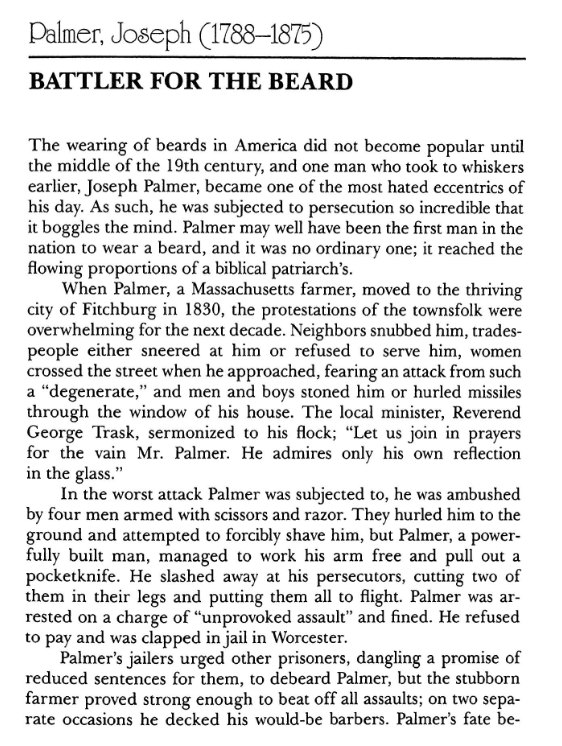
Aristocrats lost the class war, and were replaced by a “progressive” industrial bourgeoisie. This new class was anxious to assert itself, feeling the insecurity of the nouveau riche. Rococo and Baroque were eliminated and replaced with neo-classical brutalism, romanticism, and Gothic horror. The soft-shaved baby-faced aristocracy was replaced with the sideburns of Schopenhauer, the Nietzschean-Bismarckian mustache, and the beards of the Union and Confederacy.2
Democratic norms and bourgeois values constrained fluffy freedom. The KKK, Prohibition, transcendentalism, mediums, animal magnetism, and other cults generated suspicions of disease and degeneracy. The old elite were soft, decadent, and effete with ennui. The men of the 19th century were colder, harder, and more severe than those dandies.
This sexual crisis was spurred by the blood and iron of the Napoleonic wars. German Nationalists blamed their initial defeat on a lack of masculinity. Wehrhaft Burschenschaften (combat-ready patriotic student organizations) practiced fencing and gymnastics to ready a new elite for nationalist wars. The French became synonymous with everything evil: androgyny, cowardice, weakness, and infidelity. Men in tights were regarded as “homosexual.” Mormon pioneers and Artic explorers represented the tip of the masculine spear.
In comedy of violence, entertainment is achieved through bodily extremism. This was the circus: the lion tamer, bearded lady, contortionist, and clown. In the modern day, we have Jackass (2000) or Evel Knievel (1966) represents this comedy. Slapstick humor, like the Three Stooges (1922), or Punch and Judy, also represent the comedy of violence. Comedy of violence is pronounced under conditions of physical expansion and anticipation, such as during the period between the Napoleonic Wars and the Great War.
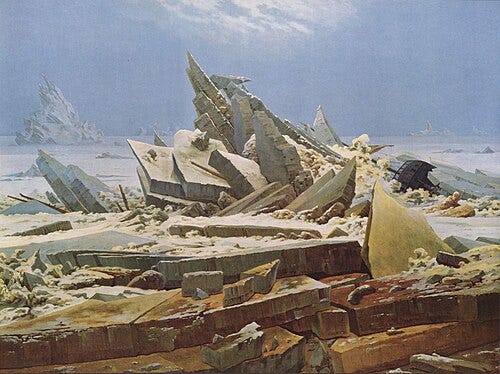
phlegmatic NATURALISM.
Scientific, industrial, materialistic, collectivistic, Darwinian. Defined by Jugendstil,3 Art Deco, stripped classicism, and Brutalism. (1883 - 1973)
By the 1890s, a new skepticism of the “old order,” popularized by Bruno Bauer, Nietzsche, and Marx, diagnosed Christian romanticism as superstitious, fearful, and regressive. Antisemitism was all the rage, and Judaism was regarded as the source of sexual neurosis. Freud stated this explicitly: Judaism achieved civilization by suppressing man’s sexual urges.
The naturalists of the phlegmatic period rejected Freudian repression as primitive and anti-scientific. They believed that if sexuality were returned to a natural state, men and women would breed eugenically, according to instinct. This is stated by Schopenhauer in his Metaphysics of Love:4
While arranged marriage serves “the interest of the individual,” it betrays “the species… therefore it is unnatural and rouses a certain feeling of contempt.” A woman who “refuses to marry a rich man,” so that she can be with a more handsome man, “sacrifices her individual welfare to the species.”
In the view of the naturalists, such as Schopenhauer and Spengler, urban capitalism and plutocracy form a dysgenic cycle, where a youthful and healthy barbaric culture falls is swallowed up by a sclerotic “civilizing” cycle, ultimately leading to degeneracy and collapse. The solution, according to both communists and fascists, was a revitalizing destruction of the old wealth-based society, so that man’s natural instincts could rule once more. Both Marxism and National Socialism promised a return to “sexual primitivism,” in which humans would breed on the basis of biology, rather than arrangements of class.
The Soviets decriminalized homosexuality; the Nazis paraded nude women in the streets and offered state support for single motherhood. Totalitarians promoted a clean and healthy sexuality, guarding against “degeneration” and disease. Phlegmatic naturalists saw nudity as not just tolerable, but a positive good to be promoted for the sake of health and eugenic fitness.
Both Nazism and communism sought to remove class hierarchies by stripping humans down to their true essence in the nude body. Sex was regarded without guilt or shame, ushering in a pagan or post-Christian science of sex. This is the period in which “sex education” becomes vogue.
The comedy of the phlegmatic is the comedy of ignorance, in which a young fool wins out over the rich and the elderly. In Spongebob (1999) the naive eternal hope of a young boy is contrasted with the cynicism of a failed artist (Squidward), a resentful academic (Plankton), and a greedy merchant (Mr. Krabs). Spongebob always wins in the end. The comedy of ignorance is most pronounced under conditions of scientific obsession and academic prestige, as during the early 20th century.
Although we don’t usually associate Nazism with Spongebob, the connection between the two can be observed through Nazi comedy films and theatrical performances. Take Carl Orff’s Der Mond (1939). Orff’s comedy is boyish, lively, bawdy, and vivacious, with a touch of juvenile heroism.5 Similarly, the greatest Nazi comedy, The Adventures of Baron Munchausen (1943), demonstrates thoroughly the phlegmatic nature of Nazi comedy. Similar comparisons can be made to Soviet art.
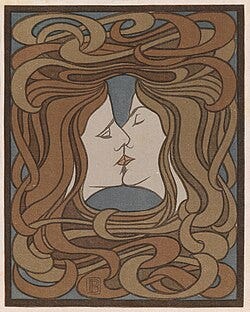
melancholic FEMCEL.
Paranoid, self-hating, hysterical, neurotic, autistic, and tortured. (1974 - Now)
In the late 20th century, during the Vietnam War, birth rates in first world countries began to crash down the brief post-war Baby-Boom. The freedom of phlegmatic sex was replaced by a self-torturing psycho-drama.6
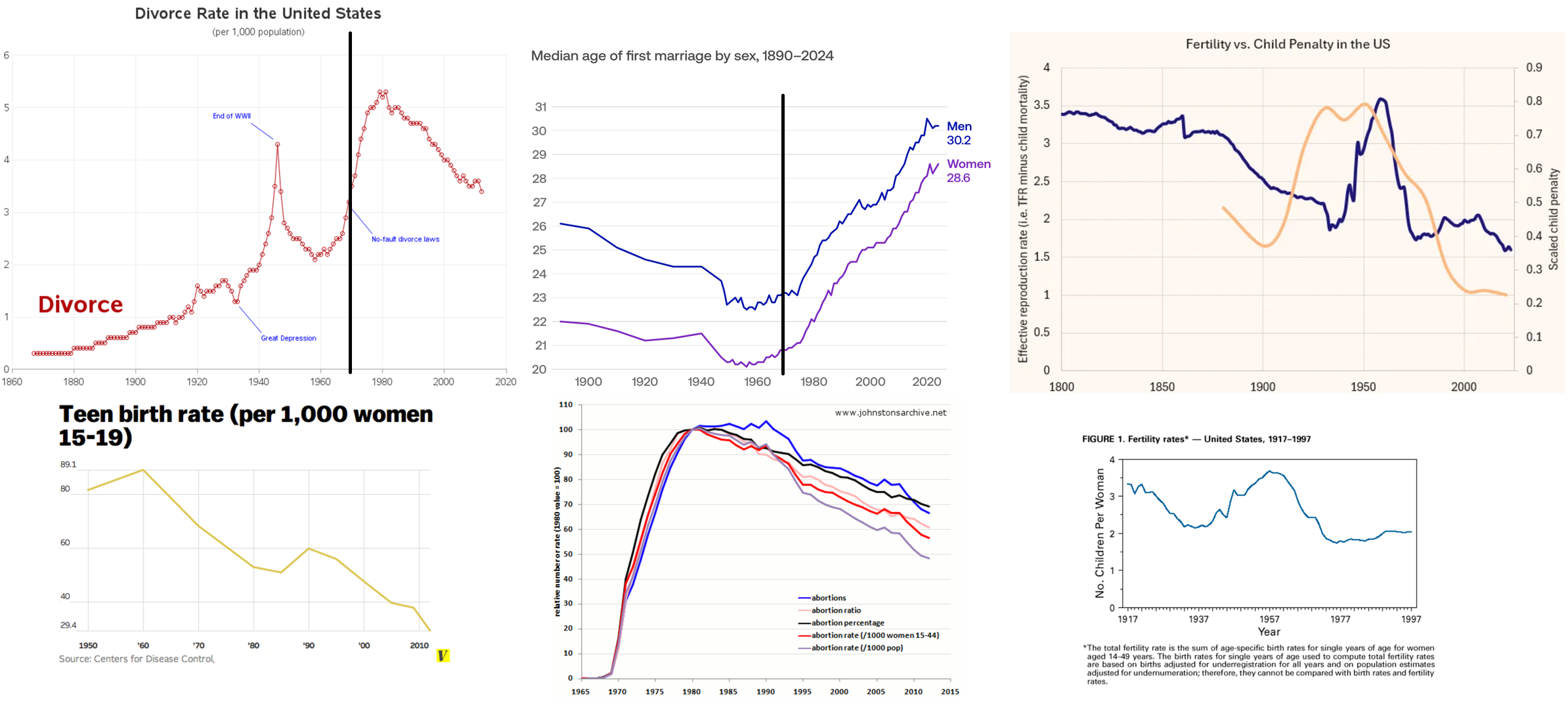
During the Melancholic Era, the scientific seriousness of the naturalists was preserved, but rather than serving an outward biological, aesthetic, or social function, it now became obsessed with an inner world of “individual identity.” This coincides with the rise of the “helicopter parent” and the obsession with “good schools” (in part, a result of racial desegregation).
The repudiation of eugenics in favor of individual suffering is represented in the film Gattaca (1997). The phlegmatic mode is presented as stifling, superficial, and cold. The melancholic hero, through self-hating, self-transformative suffering (a Christ-like passion) proves his “true identity” to a society which hates and rejects him. Gattaca is therefore a transgender film.
Whereas naturalists sought to perfect the race by means of sexual control, the trans-incel-femcel attempts to perfect the individual by means of legalistic and bureaucratic categories.
The term femcel, as I use it, does not refer to a woman who is incapable of having sex. The root “cel” is not physical celibacy, but romantic alienation, suspicion, paranoia, loneliness, and atomization. A woman can have a gangbang, and still remain a “femcel,” weighed down by guilt and shame. She lacks the inner confidence and wildness of a free sexuality.
Sometimes feminists claim to have overcome patriarchal norms. But more often, feminists seem to claim that they are further from progress than ever before — that the patriarchy is a crushing Behemoth, a Lovecraftian horror, a metaphysical certainty, an existential nightmare. This narcissistic martyr-victim complex generates endless fodder for psychological self-flagellation. The new feminist is is not liberated; she is insecure, neurotic, and fearful.
The first-world feminist seeks security through her career, or by ruining the lives of men with sexual assault allegations. But these outward expressions of sadistic resentment never bring peace or inner freedom.
Every form of sexuality is meticulously and pedantically catalogued — genetically screened, algorithmically selected, and academically scrutinized. Looksmaxers divide up sexual success into a series of measurements and hormonal adjustments. Presentation is everything.
Sexuality centers on consent, a formalized legal contract between two parties. The worship of consent makes every interaction a potential rape. Polyamory is offered as an autistic flowchart through which human sexuality is dissected, analyzed, categorized, and slotted into HR-speak and therapeutic technique. It is made safe.

In the sanguine mode, the married couple is outwardly chaste and monogamous, but inwardly hypocritical and flirtatious. In the melancholic mode, the polyamorous couple is outwardly free, but inwardly tortured and numb. The sanguine mode sweeps sexuality under the rug, while the melancholic mode seeks approval, certainty, celebrity, and recognition.
Contrast the Rococo dandy with the melancholic trans-cel. The dandy presents himself as an upstanding man, but conducts a secret affair, while his wife has one of her own. Both husband and wife are bursting with sexual virality, fucking in closets and on balconies in the midst of soirée.
By contrast, the trans-cel is desperate to “turn inside-out”; to be recognized publicly as belonging to the opposite gender. Whereas the narcissism of the sanguine is classical and flamboyant, the narcissism of the melancholic is inverted and masochistic.
The comedy of disgust focuses on filth and death. In “horror-comedy,” a misshapen, malformed, failed abortion, a talking fetus with arms and legs, an assemblage of organs parades around town until being hit by a car, bloodying the windshield, rolling off, laughing, wreaking revenge against the beautiful.7 Horror-comedy is “zombification,” an eternal recurrence of scatology and vomit without end. This form of comedy has only come into vogue since the end of the Cold War, and is consubstantial with the Goth, Emo, and Grunge movements.

CONCLUSION.
Each stage of historical development is a reaction to the previous one, preserving certain elements, while subverting others.
The Victorian saw the Cuckold as weak, hypocritical, and degenerate. However, both the sanguine and choleric mode maintain a high level of sexual “magic” and mystery.
The Naturalist saw the Victorian as superstitious and dogmatic, and wanted to re-found morality on scientific, rational, and secular grounds. But both the Victorian and Naturalist uphold a strong desire for socially-oriented moral consistency.
Finally, the Femcel centers morality on “consent”: the protection of women from harm, without any positive appreciation for aesthetics or power. This maintains the Naturalist’s desire for a “secular science of sex,” but orients it toward the suffering of the individual, rather than toward the betterment of society.
Perhaps it is time to return to a free-wheeling and hypocritical period of cuckoldry, where the rules exist as polite formulas to protect one’s social reputation. However, this would require a sense of reputation that doesn’t quite exist today.
How can a culture of porn and OnlyFans speak of “reputation”? In order for one to be a hypocrite, there must be rules to break. In an age where consent is the only thing that matters, hypocrisy can only take the form of rape. But this rape is not the ravishing of the Victorian era. Rather, it is the insidious and calculating creepiness of the male feminist, who preaches leftism in the streets, and then drugs his wife and records her being raped in her sleep. Such hypocrisy inverts the comedy of the cuckold, leaving only a horrifying tragedy.
In order for sexuality to become outwardly directed, dangerous, and powerful, there must be a potential for loss. The static charge is first built up, and then, suddenly unleashed, to deliver the shock.8
I find the right-wing worship of virginity to be maudlin, and have nothing in common with nationalist, Pentacoastal, Evangelical, or ruralite sensibilities.
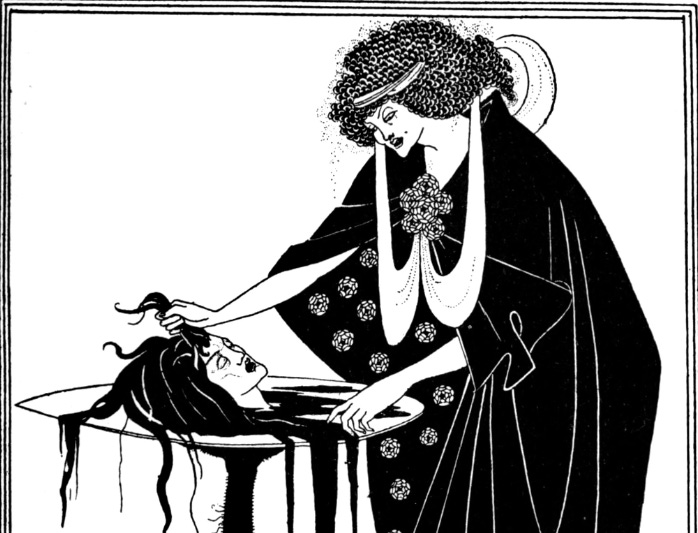


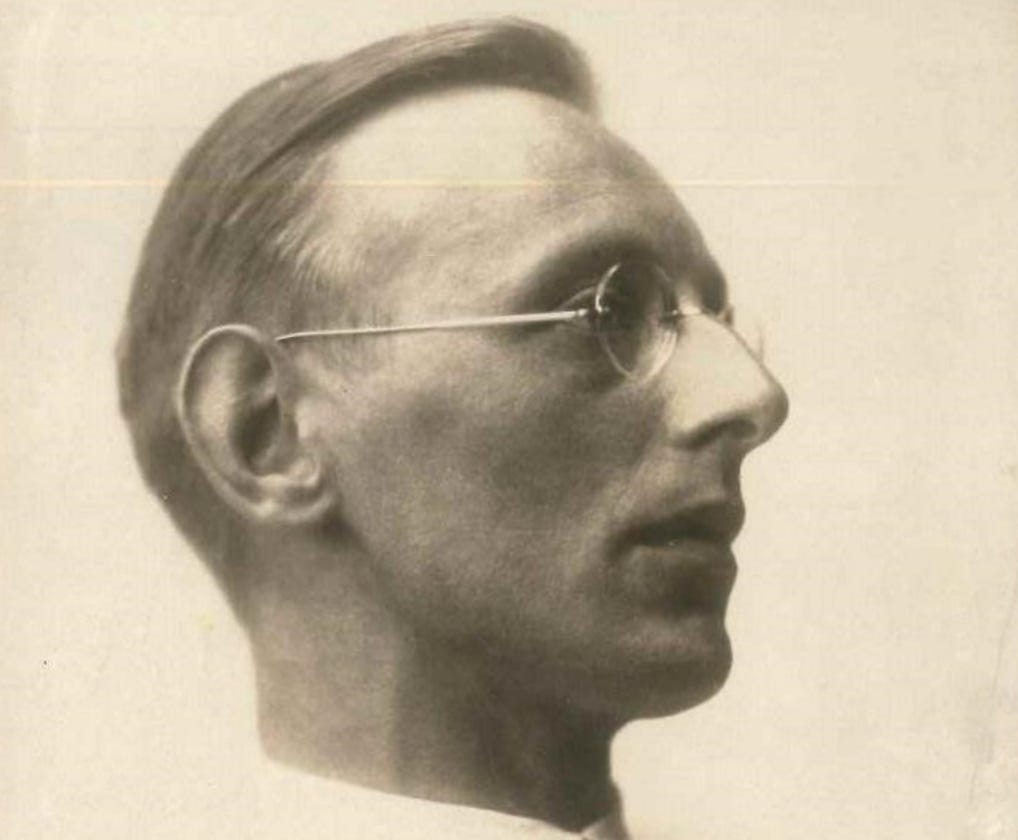
While not a Nazi himself, Carl Orff was one of the greatest artists of Nazi Germany, and a quarter Jewish. Yes, even the comedians in Nazi Germany were Jewish. He also had a magnificent nose and aristocratic bearing.
At the tail end of the Hippie era, the last dying gap of naturalism, fertility crashed massively. However, during the beginning of the Melancholic Era, fertility actually remained steady, and even slightly increased. This is despite a massive increase in divorce, abortion and age of marriage, and a decrease in teen pregnancy. [Conservatives claim that divorce, age of marriage, and abortion are the culprits behind low birth rates; but this is clearly not the case. Those three problems are subsequent to (or even a result of) lower birth rates.]
I do not agree with tetragamy as a form of polyamory, but I believe the optimal social arrangement would be the marriage of two men, and two women, as pairs. Essentially the two men would be bound together as Platonic lovers, and the women as sisters, and each would then doubly-marry the opposite sex, forming a unit of four. This would require the pairing of two best friends with two best friends, making it a more difficult arrangement. The advantages are difficult to explain, and may not be worth the trouble. However, I believe that for every man, the first and most important thing is to have a best friend, one for whom you would live and die. The wife must be secondary to this consideration. Hence I am looking for a man to marry, not for my sexual satisfaction, but for the satisfaction of my soul. I wish to formalize this arrangement with my subsequent wife, so that the bond between men shall always be respected as primary and above the bond between husband and wife.
Unc this had NOTHING do with Rick and Morty.
I came here to read about Rick and Morty not attitudes by sex wtf