
stop blaming "da fonez."
moral panic masquerading as "science."

When I was 10 years old, I learned how to read. I was behind a few of my other classmates, who had already read Harry Potter. It took me a while to catch up. I was a late bloomer (in every respect).
But, when I did start reading, I became obsessive. As a little 4th grader, I would stay up all night, till 2am, reading the Chronicles of Narnia, falling asleep with a book on my face.
In high school, I looked at my number of tardies, and it was over 50. There are only 180 days in a school year, which meant that I was late to school once or twice a week. Supposedly, if you’re tardy too many times, that’s truancy, and your parents can get arrested. I don’t know the law, but I was astounded. Why was I always late? Why did I always stay up late?
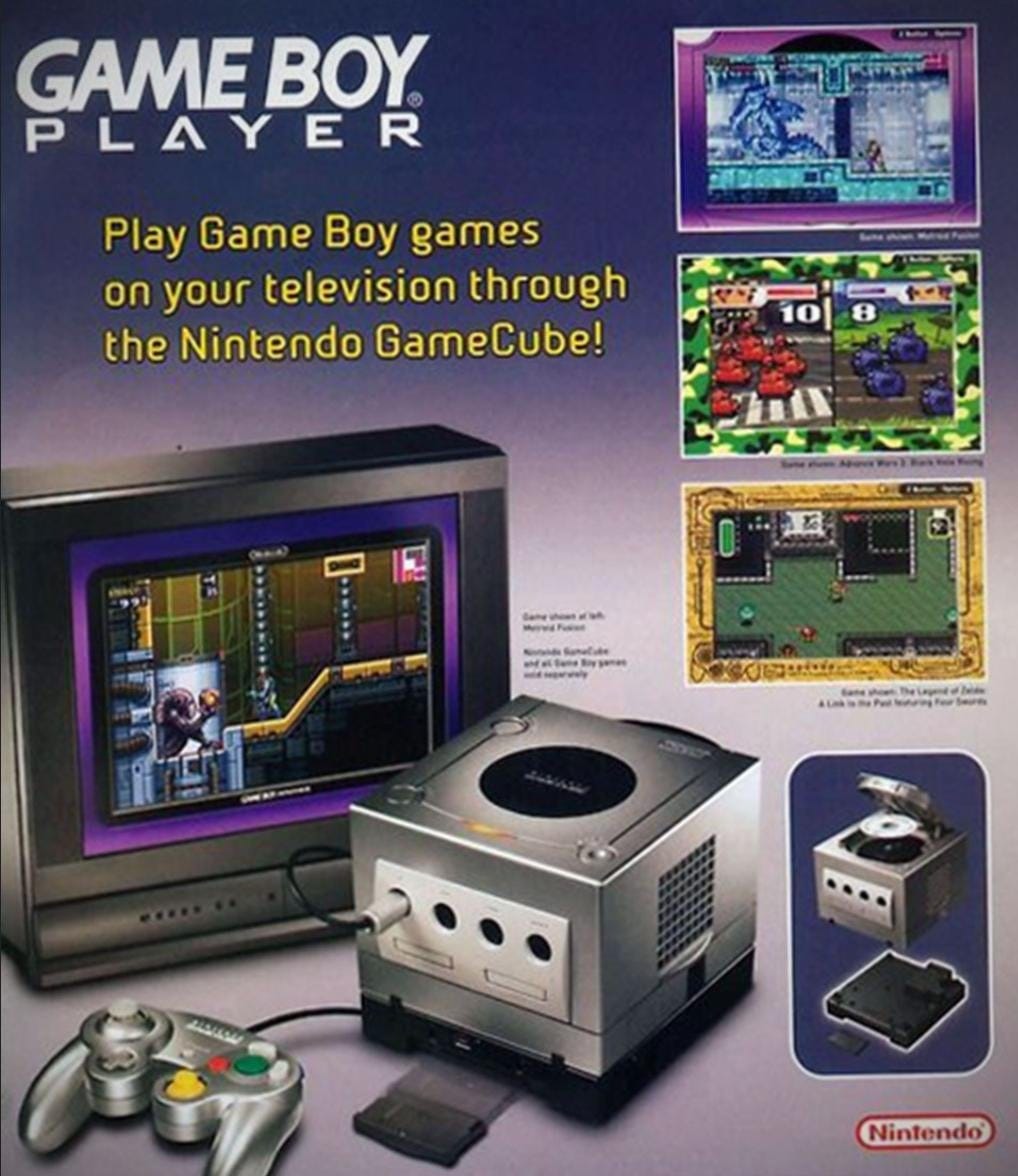
When I was 11, I got a Game Boy, and started playing that into the wee hours. Then there was the GameCube, and after that I discovered the internet, AOL instant messenger, and MMORPGs. I had my own website, webcomics to read, and anime shows to binge-watch. There was an infinite amount of content.
I would go through phases, where I would become obsessed with a particular form of escapism, then I would go on to the next thing, and the next thing. Eventually I got into hentai (because real porn was far too graphic and gross to start out with). And then came Minecraft, and not just the game itself, but the Let’s Play Minecraft series. There was Coe’s Quest, and X’s Adventures in Minecraft, providing me with dozens of hours to watch all night long until the sun came up.
When I went to Canada to visit JREG for a podcast, out of the 14 days that I was there, I had four incidents of 36-hours of no-sleep. Why? Why am I like this?
The answer is clear: it’s that damn computer! If I just got off the computer and “touched grass,” I would be a normal, well-adjusted human like everyone else. If we just banned technology, we would all be better people. Kaczynski was right.
Nothing New Under the Sun
Back in the 1990s and early 2000s, there were two types of people arguing for banning violent video games and pornography: conservative Christians, who believed it would lead to demonic possession, and liberal psychologists, whose theories of exposure predicted the outbreak of mass violence.
This type of thinking never died out: conservatives are still blaming “antifa and discord” for Charlie Kirk’s death, while liberal psychologists blame “incels and 4chan” for a rise in youth violence. Except, there is no rise in youth violence.
Despite America being less white than ever before, and single-motherhood at an all time high, and church attendance at its lowest point, youth crime is down. How is that possible? It’s “da fonez.” Instead of joining street gangs and spraying graffiti, teens are staying inside on their phones.

The anti-phone lobby today is still championed by two archetypes: the conservative Christian and the liberal psychologist. But conservatives have become more secular, now preferring the lectures of Jordan Peterson to the Bible. As Christianity has declined, an ecumenical, new-age conservatism has emerged to replace it.
This new religion is based in science, rather than superstition. The science tells us that porn is bad, phones are bad, transgenderism is bad, and they’re all related. If we could just get rid of those phones, especially social media, everything would go back to normal.
In reality, if we were to ban teenagers from using phones and social media, we would probably see a rise in teen homicide and suicide. This is because the raging hormones of teenagers are being contained by phone usage. The phone is an agent of domestication, not chaos.
Now, maybe you’re really BASED, and you think that teens forming street gangs and killing each other (and themselves) is the natural order to which we should return. That is an honest argument.1 But it is not the argument made by the phone-banners.
It’s also possible that I am overestimating the extent to which phones lower the incidence of violence and self-harm. That’s also a fair criticism, because it’s really hard to distinguish correlation from causation.

The new “Rogan conservatives” like Tucker Carlson and Theo Von point to the Amish as a picture of what society would look like without phones. What Tucker and Theo are missing here is a thing called “religion.” Which, if you want to know why “society is collapsing,” you should really consider that small confounding factor, rather than hyper-fixating on da fonez.
The anti-phone crusaders are superstitious. They believe that there is one neat trick to solving all of society’s problems -- and it’s right in our pockets. How simple, how elegant, how obvious! The only problem with this theory is that there is absolutely no evidence for it.
We all know that sad, depressed, suicidal teens are on their phones all day, while happy, healthy, outgoing teens are never on their phones. Simple enough: it’s da fonez. Not so fast!
For 5 seconds, I want you to suspend your reactionary judgment and think back to the early 2000s, before “da fonez.” Remember the story of my childhood, which is probably identical in many respects to the childhoods of millions of other kids across the planet. It started with a book, and then another, and another, until I graduated to Gameboy, and Gamecube, and porn, and Minecraft, and Runescape...
But let’s slow down. Books. Books! Really, books? I was *addicted*... to books? BOOKS! Yes, books. Ahhhh, books... A portal to another world. A way to forget my worries. A way to escape my problems. Books! I LOVED books. I was OBSESSED with books!
All day long, I was reading books, and all night long, I was reading books. In fact, my mom would punish me by hiding my books, and then I would sneak into her room while she was in the bathroom to steal back my books! BOOOOOKS!!!!

Book reading is pretty rare today, which makes conservatives sad, and is another sign that civilization is collapsing. Long attention spans are good, and short attention spans are bad. I know that I’m a contrarian who is just supposed to disagree with every common sense take, but I agree: I’d rather see my kid reading books than scrolling TikTok. Call me a conservative, I’m just old fashioned like that.
But still, books. Da bookz. Were the books making me sad, anxious, depressed? Did books cause my home life to be unhappy? Did books make me weak, nerdy, and lonely? Did books steal my joy and make me into a little emo freak, a deeply closeted homosexual?
Obviously not! I was already all those things before I ever touched a book. Instead, books were a coping mechanism I used to deal with the fact that I was an unhappy little boy.
Let me put it to you like this:
Neuroticism is a heritable trait.
Neuroticism doesn’t just refer to worry or anxiety, but also to anger, rage, jealousy, fear, obsession, fixation, suspicion, paranoia, sadness, and all other sorts of nasty emotions. Some people are more neurotic than others. And within that Venn diagram of neuroticism, there are other smaller circles, like “internalizers” and “externalizers.”
An externalizing neurotic is explosive and extroverted. If you bump into him, he’ll scream at you: “WATCH WHERE YOU’RE GOING?” Jeez, what’s that guy’s problem? Oh, he’s an externalizing neurotic!
Personally, I’ve always been an “internalizing neurotic,” also known as “passive aggressive.” If you bump into me, I’ll say “sorry, excuse me,” but for the rest of the day I’ll brood on how that little bump is just another way that I’m *always* disrespected, people *always* do this to me, the whole world is out to get me, nothing ever turns out right, it’s so over...
Being an internalizing neurotic is extremely exhausting. To all outward appearances, it makes me look like an extremely lazy person. I just sit around all day on my computer, maybe going to the gym or the beach, sometimes calling a friend, but mostly keeping to myself. I never go to bars or parties; I never go to events or festivals; I’m not a big fan of concerts. My days look very boring and drab, from the outside.
But inside, I’m on fire! I’m going crazy! Each day is a new disaster, a new catastrophe, the end of the world! I’m freaking out! AHHH!!!!
Now that the reader is sufficiently disturbed and wondering how I’ve survived this long, how I can even function well enough to type out this essay, it’s because I have a series of coping mechanisms which take my mind off myself and occupy it with something else.
Instead of thinking about that guy who bumped into me, I’m thinking about a Substack essay, or a geopolitical map, or election statistics. When I was a kid, I was occupying my mind with books, and video games, and porn, because those were the tools I had available. Now I have Substack and the gym and a few friends I call on the phone.
When I see a kid on social media all day, I don’t think, “wow, I’m sure that child would be as happy as a clam if you just took their phone away.” I think,
“wow, an internalizing neurotic in adolescent form. I bet they inherited some wacky genes from their wacky parents, and their home life probably isn’t very good, and they probably don’t have many friends, and if this was the 1990s they would be bullied relentlessly, but thanks to anti-bullying campaigns we don’t do that anymore, so now they are just exposed to cyberbullying instead.”
My point here is that the quality of human life is largely dependent on the agency and temperament of the human animal. Some people were born with more neuroticism than others, and some were born to internalize that neuroticism. Phones are just one particular coping mechanism.
Does phone usage reduce attention spans? Probably. Do algorithmic incentives push the most radical political ideologies, while suppressing moderate voices? Probably. But I think you could make all these same arguments about writing itself. In fact, the Greeks did make those arguments: they claimed that the invention of writing spread political radicalism, destroyed faith in religion, corrupted the youth, and reduced attention span and capacity for memory.
That’s why Kaczynski was controlled opposition: he claimed to oppose technology, but he trafficked in the worst technology of all: writing itself!
Pros and Cons
Richard Hanania wrote an article on the winners and losers of capitalism, in which he admits that, yes, some areas of the country were economically disadvantaged by the “China shock,” when much of American manufacturing was outsourced to China.
But Richard argues that instead of looking at the worst counties, we should look at the net effect of trade overall to the American economy. When we zoom out and see the big picture, we realize that free trade actually made Americans, on net, much richer than they otherwise would have been.
Now, you don’t have to be a free market economist to see the point of my metaphor, which is this: of course phones have negative effects. Of course! I would never deny that. However, if we zoom out, we see that they have many positive effects as well.
Phones increase the speed and decrease the cost of communication. That’s also what writing did for the Greeks, and it is what the printing press did for the Protestants, and it is what the telegraph and the telephone and the radio did as well. For some reason, we think that television and the internet and the phones go “too far,” but this is because we are concentrated on the drawbacks, and not able to see the whole picture.
Human happiness is a tricky thing. Some of the richest kids I know are also the most depressed. Some of the poorest people I know are always smiling. I have chosen to make $9k a year on Substack (thank you to everyone who supports me) rather than making $70k in a bullshit job.
My previous job was easy, routine, and boring. Substack is challenging and makes me question my identity and worth on a daily basis. Am I actually saying anything important? Do people even read this, or do they just skim and then skip to the comments to dunk on a strawman?
It’s like every day I’m wrestling with God, confronting the question of whether I have any value in the world, trying to do my best to reach my full potential before my short time on Earth is over, and I come to that moment of realization that all I ever did was all I will ever do, and it is over. Will I be satisfied?
I am not actually sure that my choices are making me “happier,” and I am not sure that “happiness” is a state that can be attained through one strategy or another. Some people are just born with a low level of neuroticism, and they are basically content 99% of the time. Other people, like me, are born highly neurotic, and we are agitated and worried and dissatisfied 99% of the time.
When we see kids that are depressed, our first thought is maternal: how can we help this kid? How can we make them happy? But the truth is that happiness comes from within, and it cannot be forced from the outside by draconian limitations on freedom.
In the ideal fascist state, we would force everyone to exercise and eat healthy. The military isn’t exactly fascist, and military food isn’t always very healthy, but it’s probably healthier than the slop that the average American eats. But is the average soldier... happier? I do not think so, and I don’t think anyone actually believes this.
I am an advocate for diet and exercise. I’ve done my 30 minutes of cardio and eaten my 16 ounces of baked chicken today. I just don’t think that there is any skeleton key to the problem of human happiness. You can add in some good things, take away some bad things, but mono-causally reducing all the problems of civilization to a single method of communication (da fonez) has more similarity with superstitious scapegoating than scientific empiricism.
Common sense tells us that immigrants are violent, greedy landlords drive up rents, Machiavellian elites suppress wages, and da fonez make kids unhappy. If you question these dogmas, the response is pretty emotional: pedophile, globalist, parasite! Crucify him!
Books, video games, and da fonez are ways that kids (and adults) can escape the stress of internalizing neuroticism. They are coping mechanisms, each with their own costs in terms of time and energy. Some might be better than others, sure. But we need to remember, at the end of the day, that these activities are downstream of personality.
Sad kids escape reality. Getting rid of da fonez doesn’t solve sadness. It might replace one coping mechanism with another, sure, but in comparison with what?
Kids used to beat each other up in the street, smoke cigarettes, and get drunk. Now, in part due to da fonez, they do less of that. I am totally open to the idea that kids should start fighting and drinking again -- make that argument, and I’ll listen to it.
Maybe it would build character and make us a tougher and more masculine society. Maybe it’s ok to raise the crime rate if, in exchange, we get a cooler society as a result. I’m sympathetic to that. But if you take away da fonez from kids, they will not become little Amish dairy farmers, reading books on Christian heroism and fighting dragons.
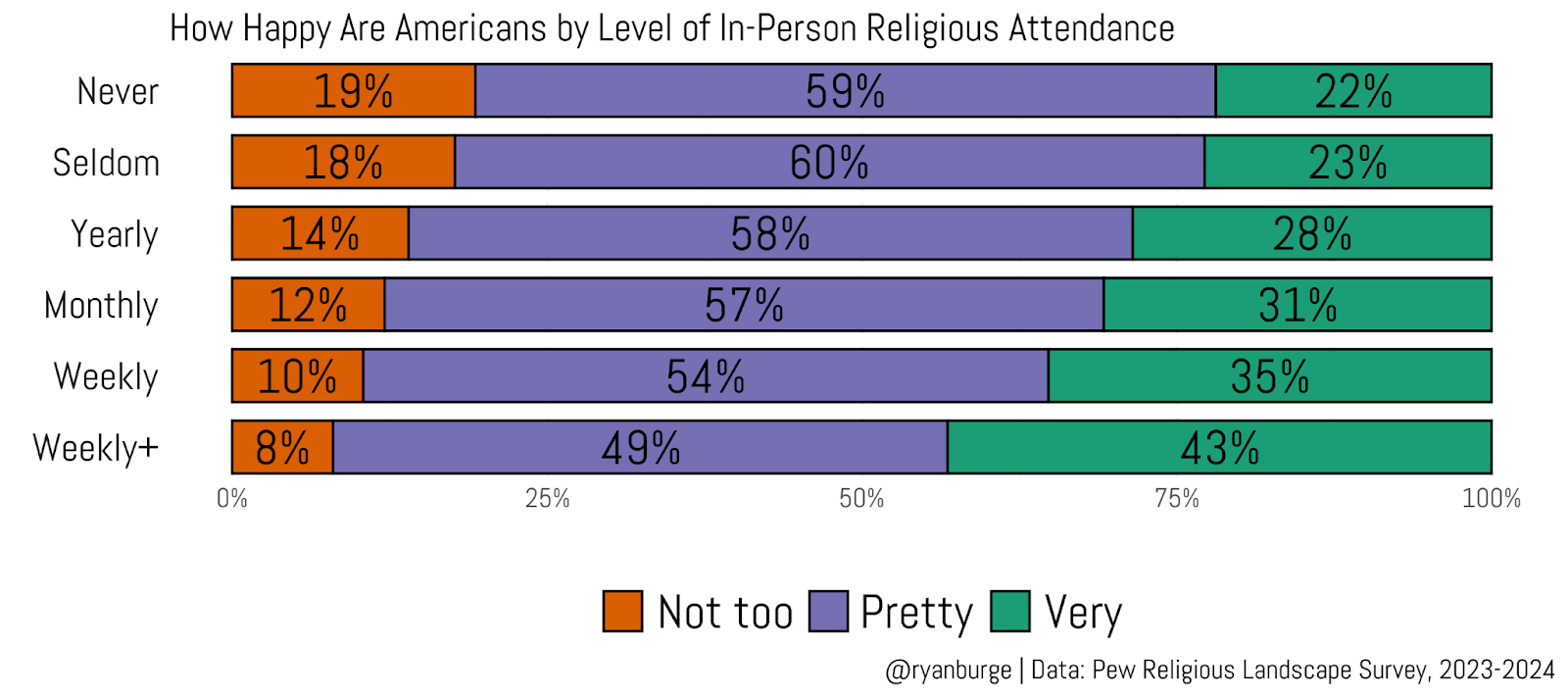
If you wanted “one weird trick” to make kids happier, I would suggest instituting a theocracy where we force all children into church on Sunday. There’s much more evidence for that making people happy than taking away da fonez.2
Even if this worked, I think that the consequences of eviscerating the First Amendment would make this deal a net negative, but if all we care about is this amorphous, difficult to quantify measurement called “happiness,” that would be a better argument.
The reason why Christians and post-Christians and liberal psychologists are so hellbent on scapegoating da fonez is because they have so thoroughly failed in every other area. The last three decades have seen young men flee churches in the greatest numbers seen since the Protestant Reformation.
Liberal psychologists keep getting more money and more power over society, but we aren’t any happier or “mentally healthier” because of their pseudo-scientific theories. Both the Christian church and liberal psychologists have failed America. Instead of being introspective and asking why that is, they prefer to blame those “damn, demonic phones.” It’s a classic scapegoating maneuver.
I’m not even pro-phone! Just anti-scapegoating.
If I had a kid, I wouldn’t give them a phone. But I would also make sure that they had plenty of opportunities to occupy their curiosity and sense of adventure. I would want to live near a nature trail where they could run around, unsupervised, as I was able to do. I would want them to have access to plenty of nature documentaries and science documentaries, so they could learn about our reality and the cosmos.
I would also want to give them plenty of material on religion, spirituality, and mythology, because within those traditions are powerful stories that inform the nature of civilization and human psychology (much more informative than the theories of liberal psychologists).
Above all, I would make sure that they had access to people: people totally unlike me, with different personalities and outlooks on life. I would want this kid to be able to pick and choose among a variety of friends and activities, being exposed to competition and challenges, and not feel stuck at home.
The vision I’ve laid out is ideal, but the reality is that most kids live in something far from the ideal, much more akin to a prison. They aren’t allowed to roam freely in nature; their parents don’t provide cool documentaries or learning opportunities; there is no introduction to the great works of world literature; no supportive framework in which to grow; no social community from which to choose.
They are just stuck at home with da fonez. So they use da fonez. If you want to take away da fonez, you have to replace them with a different coping mechanism. If you don’t, you’re just taking away a privilege of a prisoner, which is not an act of mercy, but of cruelty.
It’s also true that different children might have inherited desires. I was curious about the world; other kids weren’t. You can bring a horse to water, but you can’t make him drink. We assume that if we took away da fonez, that all these mindless zombie children would suddenly turn into bold adventurers, curious scholars, amazing explorers of the human mind and the universe itself! Their unbounded spirit would be unleashed from the prison of da fonez, and they would finally be free!
What you might find, however, is that if you take away da fonez, kids would just replace one mindless zombie activity with another: cigarettes, weed, vaping, teen pregnancy, gang activity, and vandalism. If you think those alternatives are superior, say so. But don’t tell me that they’d be learning calculus and practicing their violin.


It’s also possible that more neurotic people are opposed to religion, while less neurotic people are more likely to adhere to it, making this effect purely selective rather than causal. I’m just saying there’s more evidence here than “da fonez.”
In general I think you are correct but I did in fact learn calculus in middle school because my parents only let me play minecraft for one hour a day and I had no friends to do vandalism with. Backfired though because played minecraft 10 hours a day in college and blacked out about once a week. So no I do not think the repressive environment is good.
Totally relatable article 10/10