
Nuclear Power Isn’t That Great
sorry to burst your bubble.

I am not against nuclear power. But I am against nuclear maximalism, which is the idea that we should build hundreds of new nuclear plants to gain access to infinite, free, cheap, clean, limitless energy.
Before critiquing nuclear maximalism, I will lay out the brief case for why nuclear power is good.
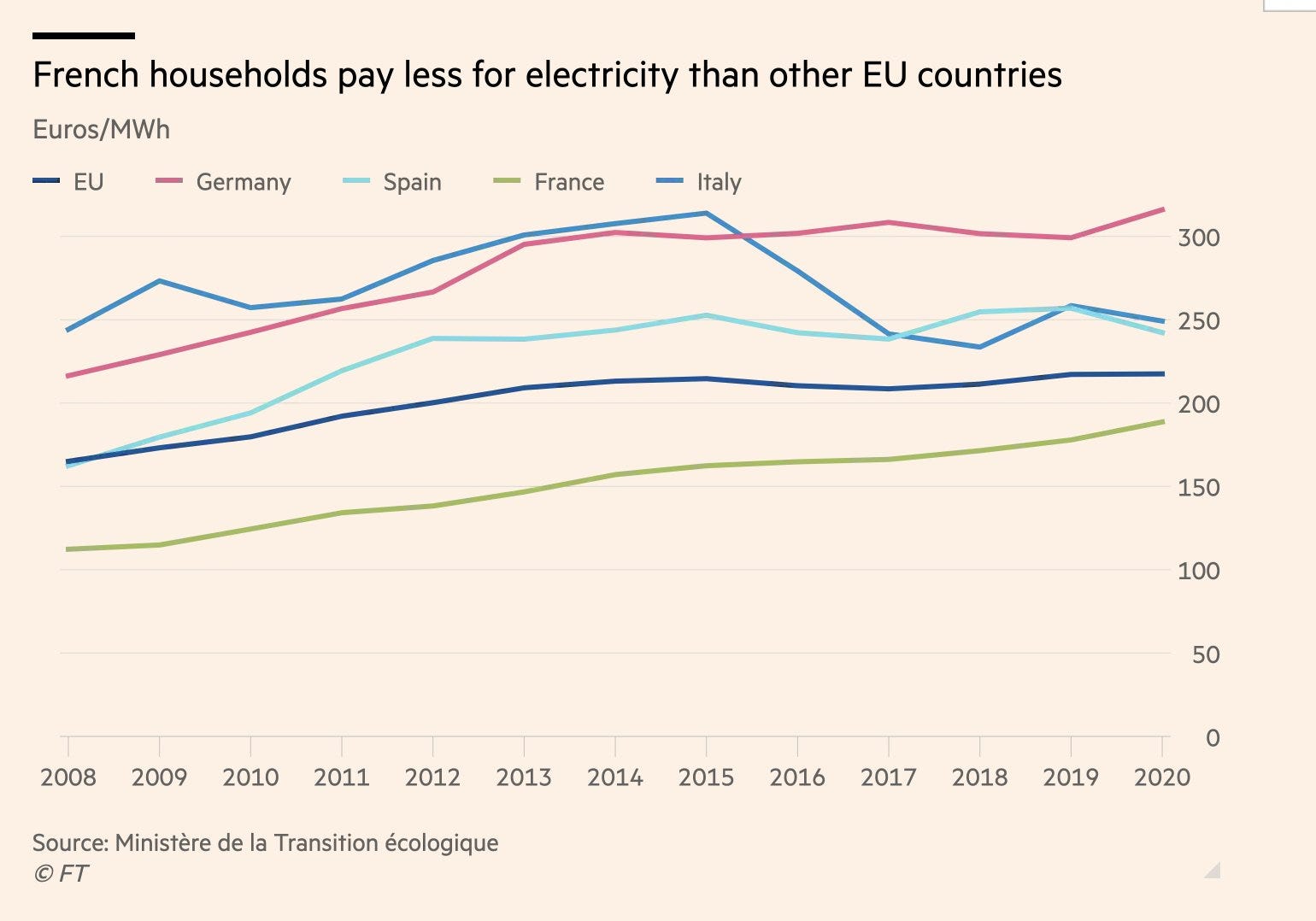
France has a lot of nuclear power. It also has cheaper electricity than Germany, Italy, Spain, and the EU average.
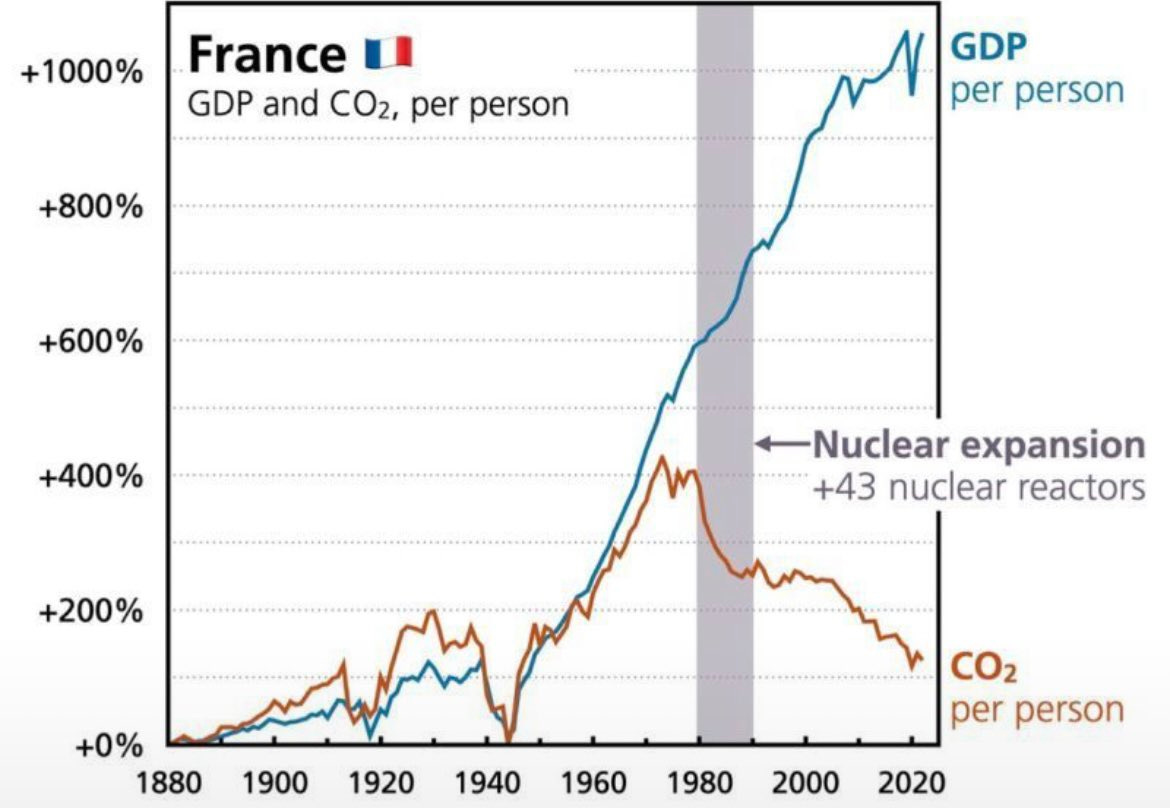
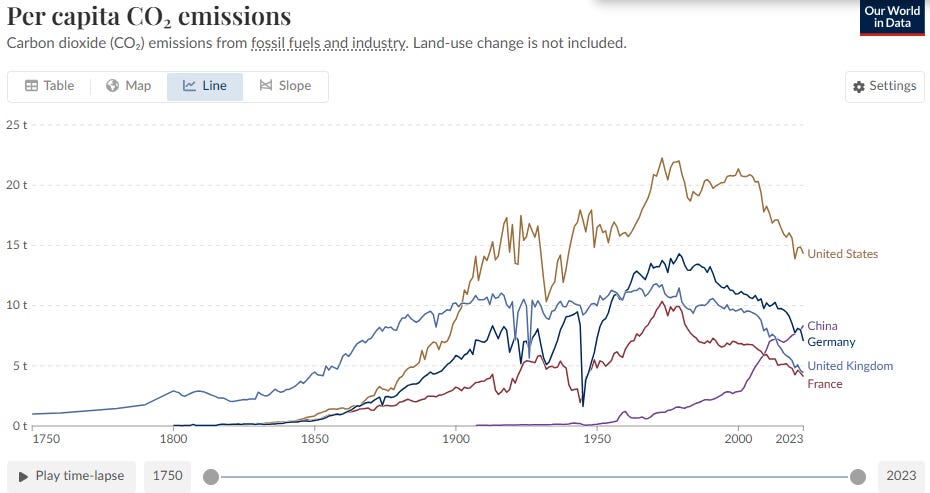
I don’t care about CO2, because I want to green the Antarctic and start a new civilization. But if you care about carbon dioxide, nuclear is also the best.
Nuclear waste isn’t expensive to dispose of. Dig hole in mountain, put waste in hole, seal up mountain, profit.
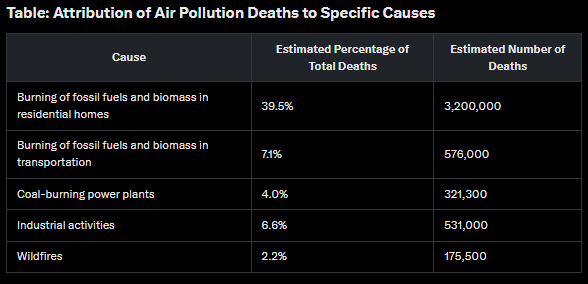
Nuclear reactors aren’t hazardous to human health. Chernobyl killed 4,0001 people, but this is 2,000x fewer than are killed by air pollution on a yearly basis.2
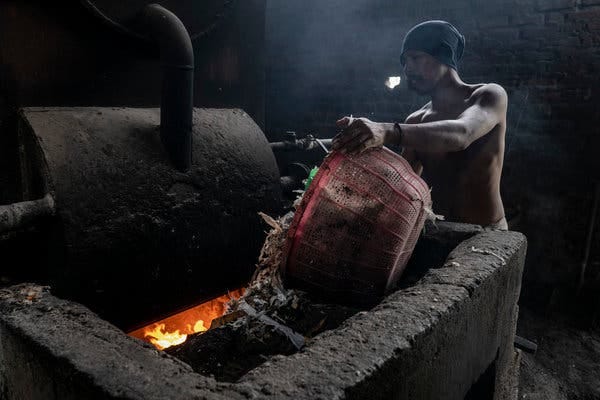
Indonesians burning plastic for tofu kill more people than nuclear power. Wood-burning stoves are the equivalent of 1,000 Chernobyls. Nuclear power is not a danger to human health.
Nuclear power is:
Cheap, clean, healthy
Eco-friendly and non-toxic
Durable and long-lasting
Limited edition
Great with kids
Fun for the whole family
50% off
buy-one-get-one-free
Free shipping with purchase of your first reactor
Money-back guarantee
But despite all these amazing benefits, nuclear power lacks two important qualities:
Nuclear is difficult to securely decentralize, scale down, and transport, making it vulnerable to attack, sabotage, and vertical failure.
You cannot run militaries on batteries.
The Security Risk of Nuclear Power
In mad max world,
Power lines are stripped in broad daylight to support a meth habit;
Russian engineers bomb American power stations;
Traffic lights are replaced with stop signs because of rampant theft.
These are currently marginal issues. But if we expect America to get worse over time, we should want energy infrastructure to be decentralized, anti-fragile, and easy to repair. Nuclear is complicated and vulnerable to attack.
Optimistically, America won’t get worse, because AI will pacify potential terrorists with pornographic simulations.3 But even if that comes to pass, the risk of hackers or terrorists remains. Losing 20% of the electrical grid in a terror attack is a tolerable risk; losing 80% would be catastrophic.
Why do you hate nuclear so much?
The future is complicated. Some degree of nuclear power is optimal, between 18% (America) and 65% (France) of total energy consumption. I am not arguing for a reduction of nuclear power below 18%. I would encourage any country with less than 15% reliance to build more nuclear. As technology improves to alleviate my concerns, I would not be opposed to doubling or even tripling American consumption of nuclear.
My point isn’t to say that “nuclear power is bad” or that we couldn’t, in the future, expand. I am simply saying that anything above 65% reliance is risky, and I want to explain why.
I am writing to dispel the popular myths of nuclear maximalism:
We don’t have more nuclear because politicians are dumb
We would have more nuclear if it wasn’t for environmentalists
France has the optimal amount of nuclear reliance
These ideas fuel the conspiratorial thinking that the American government is uniquely bad or incompetent, and that other governments are vastly superior. This is a popular narrative on the right and left, but this narrative is generally wrong.
Our healthcare system is cost efficient when considering the terrible lifestyle choices of Americans. Our housing prices are a logical response to the violent, schizophrenic, drugged-out proclivities of our masses. When you control for these factors, the American system works much better than China, France, or Canada. Singapore, Sweden, or Switzerland might beat us on some metrics — but those countries have smaller and higher quality populations to deal with.
It’s not that the American system is failing — it’s the population that is uniquely violent and risk-taking, when compared with Europeans or Asians. Given the material we have to work with, America is the closest thing to peak governance on planet Earth. Our current low reliance on nuclear is not a result of irrational, incompetent, or conspiratorial forces, but a logical response to risk factors.
I am a Leibnitzian Americanist: we truly do live in the best of all possible governments. Any grand sweeping theory of why America is retarded coming from political extremists of the left and right should be presumed to be motivated by petty resentment and personal problems, rather than by facts and logic. Long live the Deep State!
France is a fake country.
France gets away with 65% nuclear reliance because they have been protected from German invasion by American occupation for the last 80 years.
NATO is sort of like the Holy Roman Empire. It has a bunch of little princes and duchies, like Starmer and Macron and Merz. It has weird little laws and patchwork disagreements, with some princes being Protestant (woke, Sweden) and others being Catholic (reactionary, Hungary). It’s not a coherent governing system, but it is a system nonetheless. NATO can be considered as a “bloc” for the purposes of analyzing nuclear reliance.
Because of NATO, France can afford to do silly things like have a huge overreliance on nuclear power. But if you analyze NATO as a system, France’s overreliance “averages out” to a much lower level of reliance at the system-wide scale.
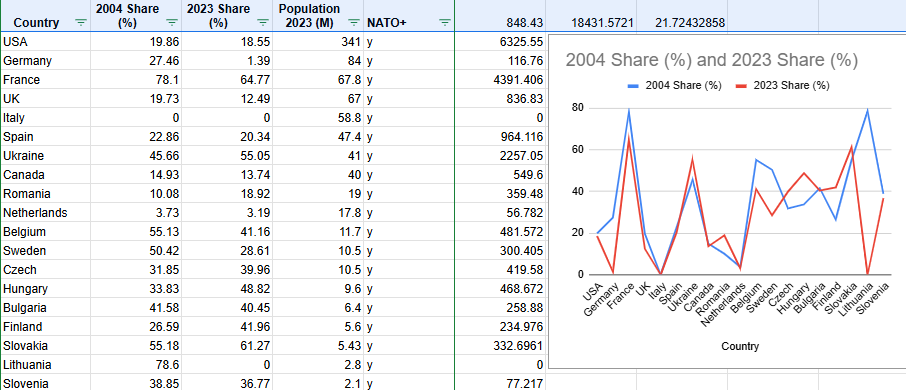
When you add up the NATO4 members with nuclear reactors, and weigh each of them by population, the total weighted average reliance comes out to 21.7%.5
Y’all cowards don’t fight wars.
France used to be a real country. When it was a real country, it had to fight wars. That’s what real countries do: they expand militarily until they hit some desert, mountain, barren nomadic steppe, Germanic tribesmen, or another empire of relatively equal power. Countries which do not do this are not real countries, but mere client states of real countries. Grass spreads imperially in all directions wherever there is dirt, and so real states do the same.
If you live in France today, you do not live in a real country, but a client state of America. So Frenchmen can do silly little things like having a 65% reliance on nuclear.
France ended up in this sorry, pathetic state because they lost three back-to-back wars against the Germans:
1871: Franco-Prussian War
1917: WWI
1940: WWII
If it wasn’t for America saving them the last two times, they probably would have already lost a fourth one by this point.
You might be thinking,
Germany would never launch a fourth war on France — that’s ridiculous! I’ve met Germans, and they are very nice, and not nationalist at all! Also, the French didn’t lose WWI or WWII — they won!

Germans like to pretend that they stopped being Nazis all on their own, but this isn’t true. Denazification was one of the most thorough and brutal forms of ideological indoctrination in human history. Never before were millions of children strapped down into chairs and forced to watch human bodies bulldozed into open pits.
Typically, when a country loses a war, it doesn’t just stop being nationalist. After the Civil War, Southerners continued to fly the Confederate battle flag, and some of them still do to this day — 160 years later! German nationalism was only suppressed because the Americans and Soviets spent billions of dollars occupying and re-educating the German population.
If NATO collapsed tomorrow, I wouldn’t expect an immediate German invasion of France. But eventually, as Germany would re-arm, this would also require an ideological reorientation toward nationalism and militarism.6 In the long term, France would have to prepare for the possibility of a conflict with Germany, and this would require rethinking its overreliance on nuclear.
France lost WWI and WWII in the same way that Britain lost WWII. Both wars depleted France militarily, economically, and destroyed France’s independence and self-confidence. France is like the short friend who keeps getting in fights with bullies, and has to get bailed out by his taller friend, over and over. Eventually, the short friend subconsciously begins to lose his independence, and comes to rely on his taller friend, even if develops a resentful inferiority complex in the process.7
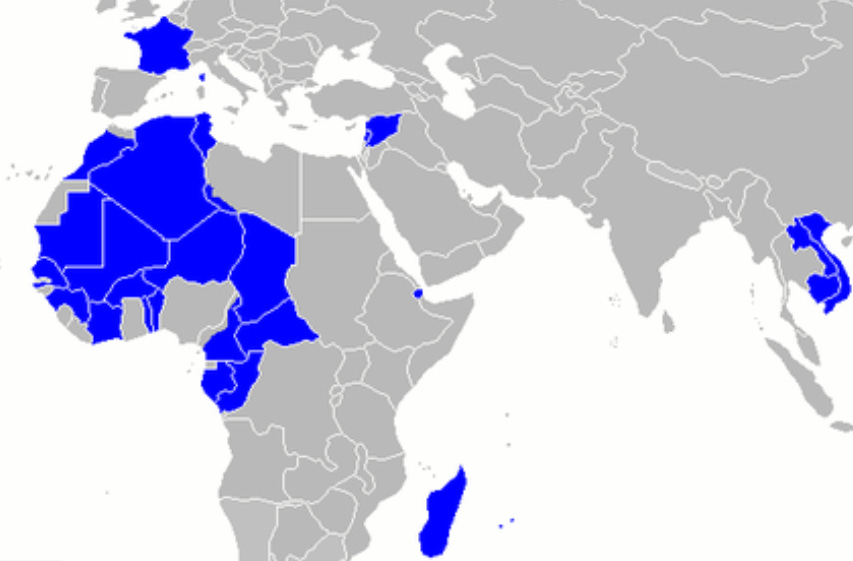
France went on to lose many more wars after WWII, including the Algerian War in 1962. This isn’t because the French were militarily defeated by the Arabs — they simply lost the will to fight, having been cucked by the long arm of liberalism.
Since that point, the French have not fought any serious wars, except for the ones where they acted as Robin to America’s Batman. Otherwise, they have been sending the French Foreign Legion to muck about in west Africa. But since 2022, most of these troops are in the process of being expelled and replaced with Wagner mercenaries.
Again, this isn’t because France doesn’t have the economic resources to massacre Africans and reinstate white supremacy. It’s because France as a country has lost the will to expand, and has become a Disney-themed retirement community for people who enjoy cheese and wine. Bon appétit! Nuclear power is appropriate for such a lifestyle.
France is not a fully sovereign country in the way that America or China is. It can rely on others to come to its defense. Therefore, its nuclear power does not need to be constrained by the limits of its security capacity. But America does.
This doesn’t mean that nuclear power can’t be a good auxiliary or addition to other forms of energy. There’s nothing catastrophic about 18% reliance. But anything over 20% begins to risk over-reliance, because you can’t fuel tanks, planes, or drones with nuclear energy and lithium-ion batteries.
The Myth of Degrowthers
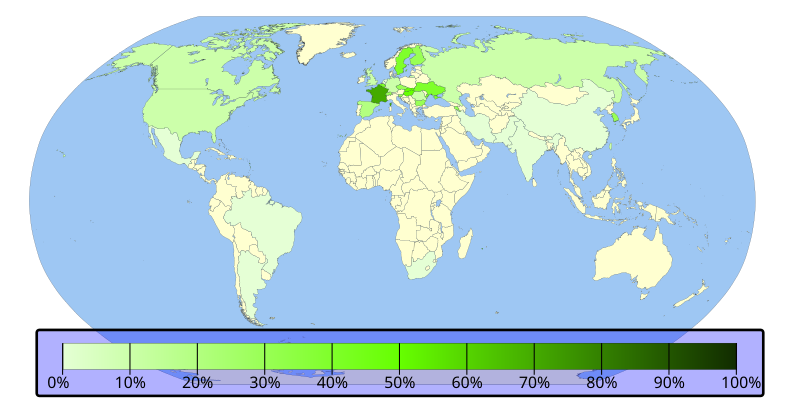
One of the big lies that nuclear maximalists like to tell is that “it’s only because of Green Party degrowthers that we don’t build more nuclear.” Some maximalists believe that Russia or China is funding the Green Party in Europe to promote de-nuclearization.8
But if a Russo-Chinese-Green-Party conspiracy is holding back the west from nuclear maximalism, shouldn’t Russia and China be maximalists themselves?
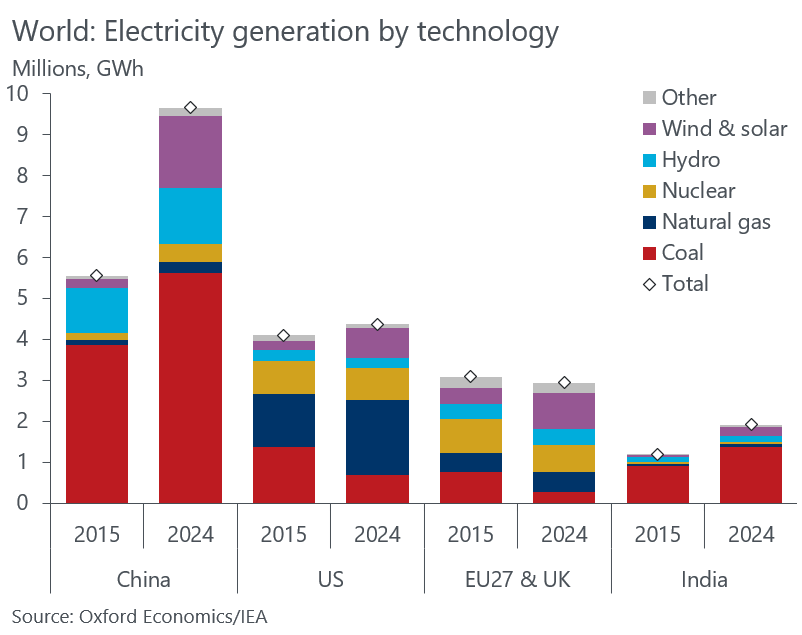
Supposedly pragmatic and “based” countries like China, India, and Russia, which outlaw Green Party wokesters, should have much more nuclear power, right? Well, they don’t.
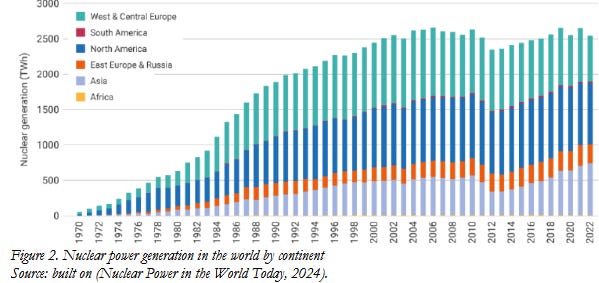
It’s only possible to maintain the fantasy that “Green degrowthers are holding nuclear back” if you turn a blind eye to inter-country comparisons. What’s holding nuclear back in those countries?
Country-by-country comparisons:
It’s not true that “France has more nuclear power than America.” Per capita, yes, but not in terms of absolute output. It’s also not true that China plans to build up more nuclear than America in the next 20 years. Not in absolute terms, and definitely not per capita.
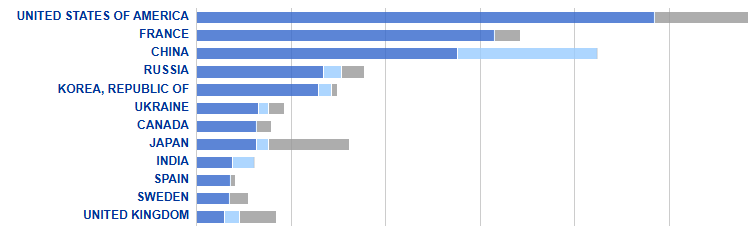
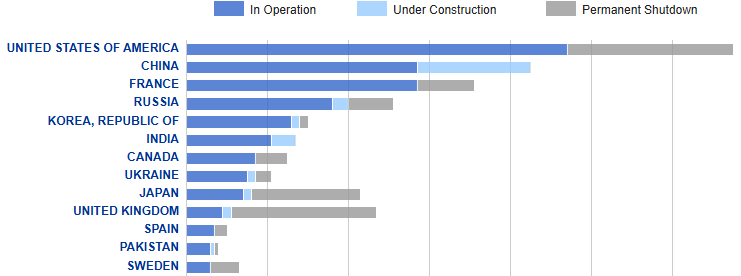
If you want to see what a serious country’s nuclear output looks like, take a look at Taiwan.
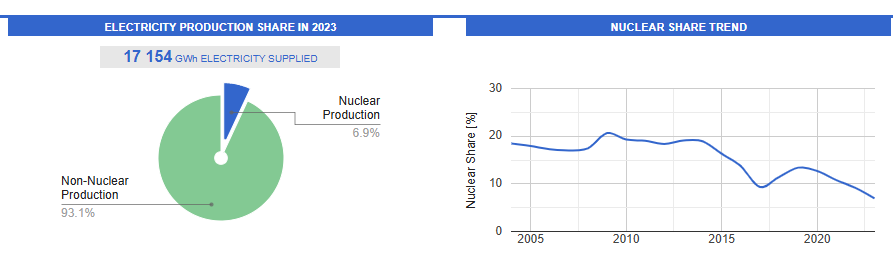
Taiwan is a serious country, because it has to deal with the threat of a Chinese invasion. If Taiwan relies too heavily on nuclear energy, those power plants are subject to the following attacks:
Physical sabotage by a 5th column
Surface-to-air missiles
Stuxnet-style cyber attacks
As a result of the growing power of China, Taiwan has significantly decreased its reliance on nuclear, as this would be a huge vulnerability in the event of a Chinese invasion.
Now you may be thinking,
China is a serious country, and they are building tons of nuclear!
This is a misunderstanding of the argument. 5-10% reliance isn’t a catastrophic systemic risk. China started off at 2% back in 2010, and now stands at 5%.
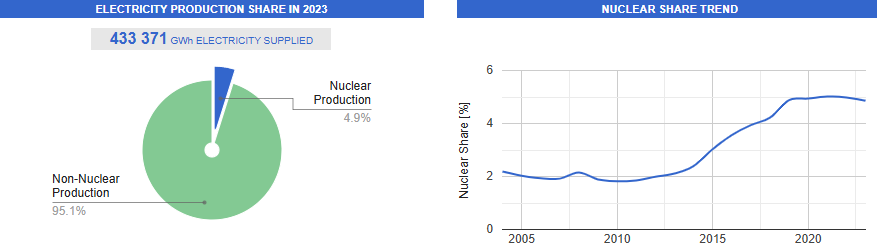
Now let’s compare China’s numbers to America’s:
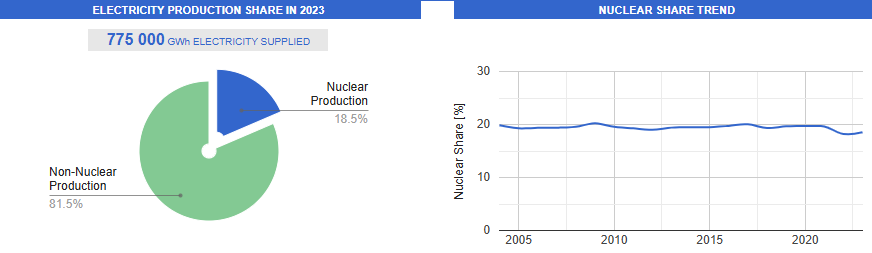
America has 3.8x as much nuclear as China. If America is an irrational, decadent, degenerate power, and China is modern, advanced, and savvy, then America should follow China’s example by maintaining its current levels of nuclear power, not expanding to French levels.
How much chocolate should you eat?
There are some studies suggesting that a little bit of chocolate is good for you. Maybe this is dietary pseudoscience, but let’s assume the effect is real.
Assume that eating one chocolate bar a day will reduce depression, anxiety, help you get better sleep, and improve the strength and duration of your erections. But that doesn’t mean you should replace 80% of your calories with chocolate consumption.
Here’s another metaphor:
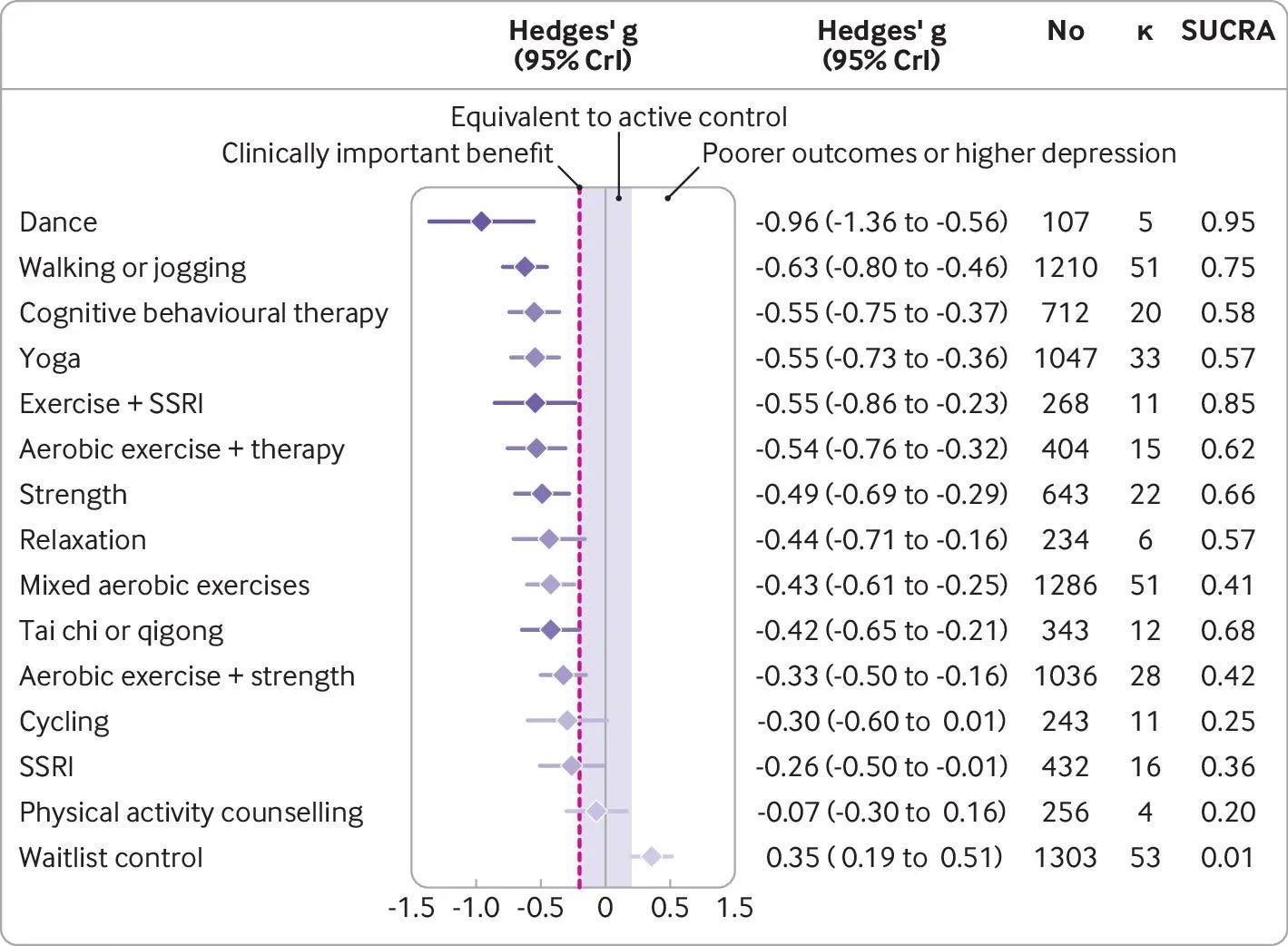
Moderate exercise is a good way to reduce the risk of depression. Does that mean you should become an exercise addict, going full David Goggins, running 4 hour marathons every single day? Not unless you want to destroy your joints and end up in a wheelchair at age 60.
Just because something is good in moderation does not mean that it is a cure-all solution to every problem. So, what is the optimal or moderate level of nuclear reliance? The answer is not 100% — that is a thoroughly delusion and unserious belief. It’s not necessarily 0% either.
Another way to think about energy is through the metaphor of a stock portfolio. When you invest in the stock market, you want a healthy exposure to a number of different industries:
tech, retail, energy, healthcare, banking, utilities, and telecommunication
Within each of these industries, you also have further divisions, like established tech (social media) vs experimental tech (AI or quantum computing).
But a wise investor doesn’t just put all their money in stocks. They also own equity (real estate), bonds, commodities (precious metals), crypto, and liquid cash.
What’s the optimal exposure to each of these investments? It depends on your risk tolerance. If your tolerance is infinite, you might buy MELANIA coin and hope she gets appointed queen of America after Trump’s death. As risk tolerance approaches 0, people stock up on ammo, ramen noodles, and build private nuclear bunkers.
If all war, terrorism, and industrial sabotage stopped tomorrow, switching over to a 100% nuclear powered world would be a good idea. But if the future looks more like South Africa, then nuclear power is a terrible idea. The reality is somewhere in the middle: not South Africa, but not eternal world peace either.
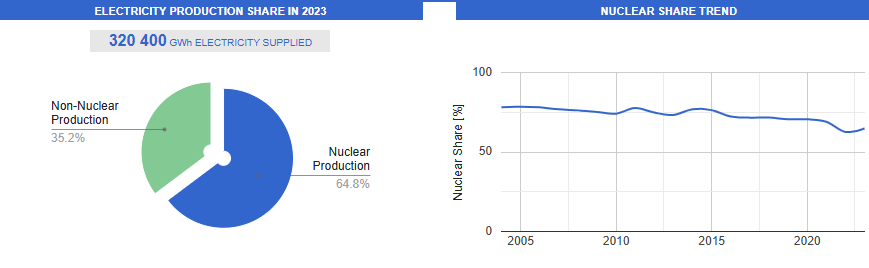
In 2004, 78% of France’s power was nuclear. In 2023, that decreased to 65%. This indicates that France is realizing that its overreliance on nuclear was a bad idea, and it should head in the other direction.
What about Ukraine?
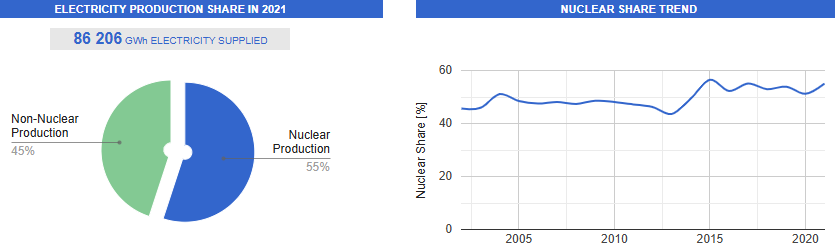
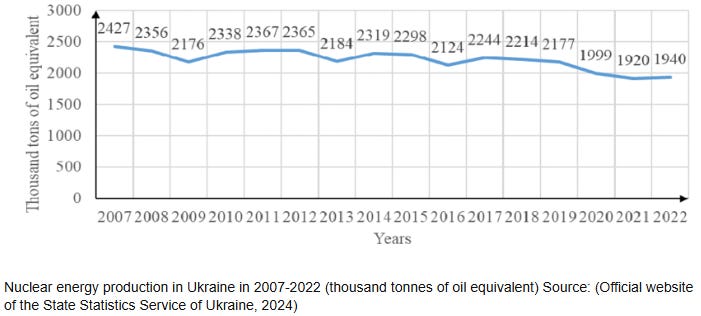
Ukraine has sustained a high level of reliance on nuclear power over the last 20 years. The reason for this is that the vast majority of these nuclear plants were built by the Soviet Union, not by an independent Ukrainian state.
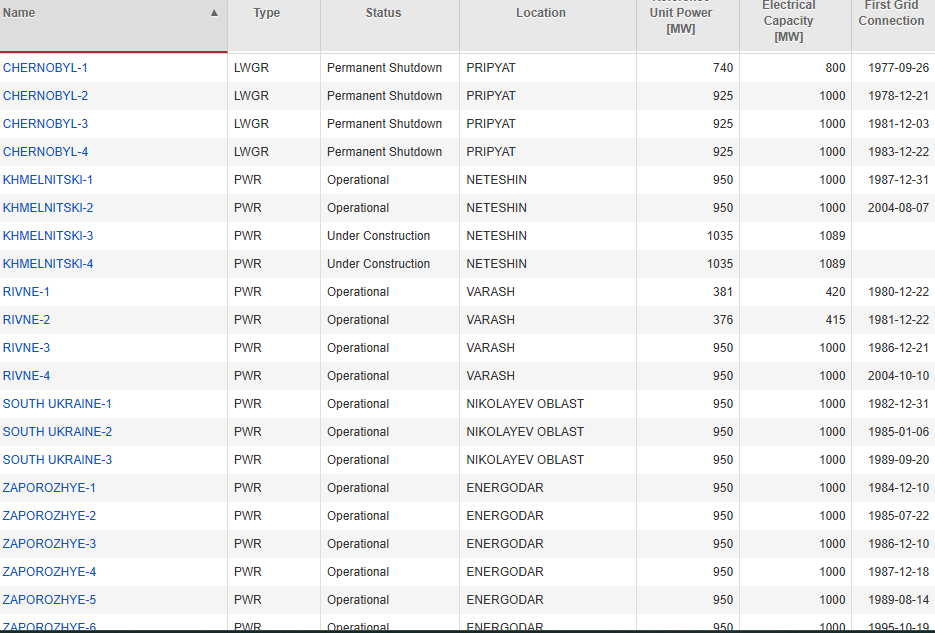
The Ukrainians do not have a single nuclear power plant where construction began after the fall of the Soviet Union. It’s stuff that they were given for free, and they decided, “what the heck, we already have all this free stuff, might as well finish it up and get something out of it.”
Ukraine, since becoming independent, has not built new or additional nuclear power plants. It has only continued to run old ones, or finished construction on plants which were nearly finished prior to Soviet collapse.
Ukraine neglected to complete K-3 and K-4, and left them to rot for 30 years. Finally, this past February, Ukraine purchased some equipment from Bulgaria to finish the job. But this isn’t very impressive. The fact that Ukraine, a country which has the highest drone production in the world, cannot be bothered to develop its own nuclear equipment, but instead buys knock-off equipment from a failed project in Bulgaria, should not excite anyone.9
Ukraine did not choose to be a nuclear-heavy power. The infrastructure of Ukraine’s nuclear industry was already in place before it gained independence. Ukraine is only using the resources available to it.
Russia is fully capable of destroying all of Ukraine’s nuclear power plants and destroying the country. Russia has not done this, since it would trigger reciprocal action by NATO, who could, in turn, easily destroy Russia if they wanted to. The claims that the war in Ukraine is “total” or “maximum conventional” are detached from reality. Russia has adhered to strict rules of engagement to avoid increases in NATO involvement.
The fact that Russia hasn’t bombed Ukraine’s nuclear power plants into the stone age isn’t evidence that it could not do so if it wanted to. The War in Ukraine provides us with no evidence of what happens when a nuclear-reliant country enters a state of total war. Anyone using Ukraine to prove that “nuclear reliance is safe and has no security flaws” misunderstands Russia’s constraints. They’ve spent too much time consuming both NATO and Russian propaganda, which falsely portray the war as “total” in scope.
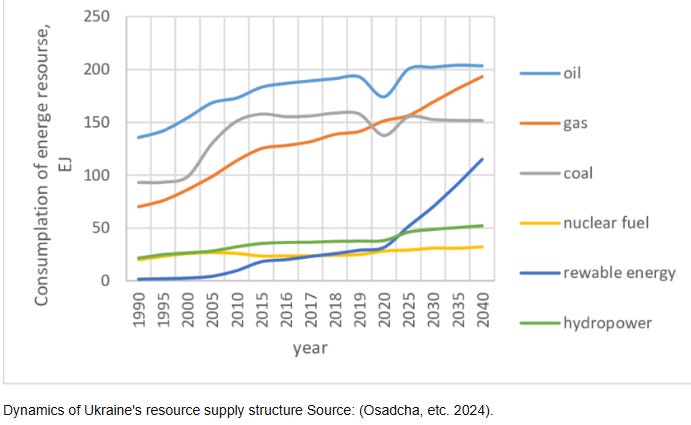
Looking toward the future, Ukraine has no plans to massively increase its nuclear reliance, and instead is looking to decrease its reliance on nuclear by increasing its consumption of gas and renewables.
But can’t you bomb an oil field?
Nuclear is vulnerable in warfare because it is a single point of failure. If you destroy a nuclear power plant, it takes a long time to rebuild.
For example: construction began on the Kashiwazaki-Kariwa Nuclear Power Plant in 1980, and it was completed in 1985. However, peak energy production was not reached until 1999, 19 years after the beginning of construction.
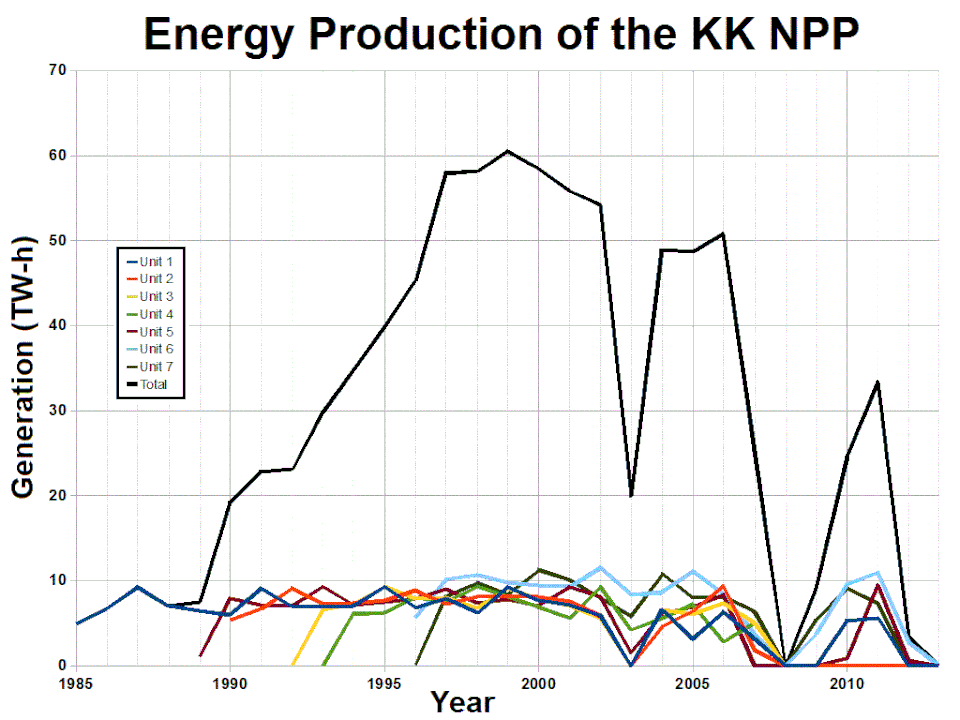
It might be possible to build a nuclear power plant in three years, but that is still a very long time when fighting a war.
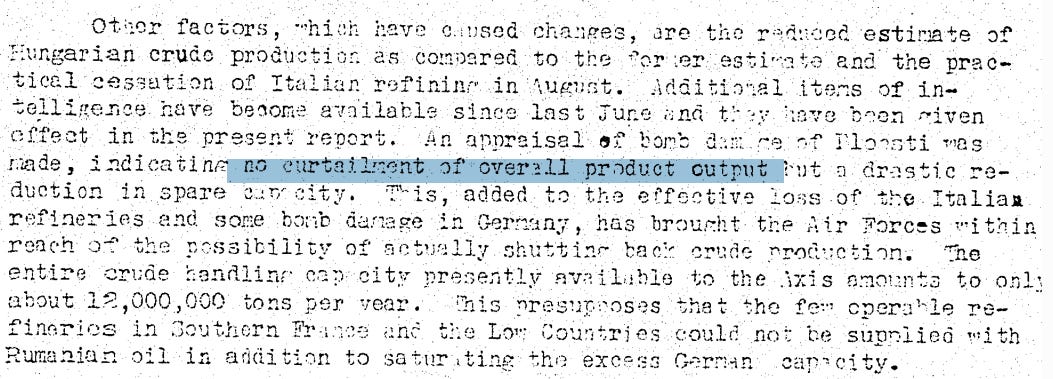
During WWII, the Enemy Oil Committee attempted to assess how much damage Allied bombing caused to Axis oil production. In its 1943 report, it determined that bombing resulted in “no curtailment of overall product output.”
When Saddam Hussein burned the Kuwaiti oil fields in February 1991, the last repairs were completed by November, nine months later. Saddam destroyed one billion gallons of oil, but this represents only 2% of Kuwait’s oil reserves. By contrast, if Kuwait relied on nuclear, Saddam’s sabotage would have bankrupted the country for years, if not decades.
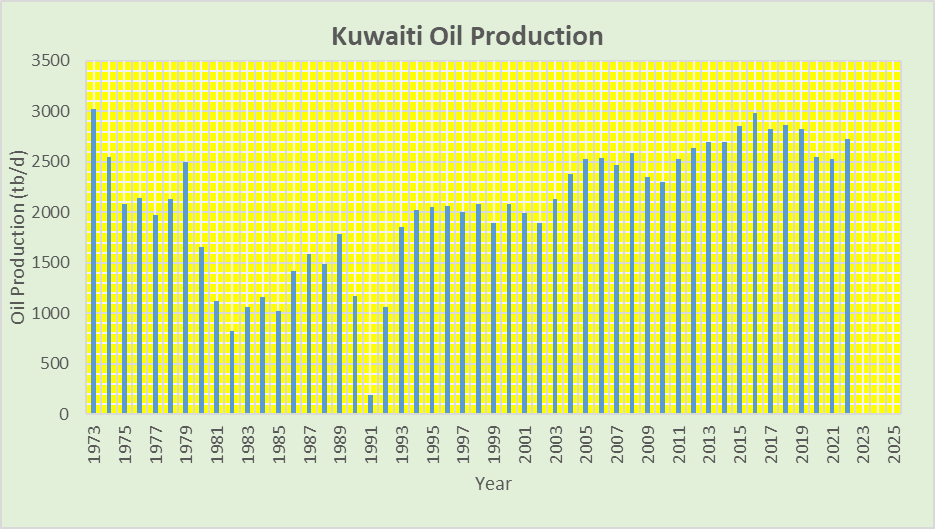
It is much easier to obtain, refine, and transport oil than it is to obtain, refine, and transport energy derived from nuclear power. In order to use nuclear energy, you need an electrical grid, and you need lithium-ion batteries. To use oil, you need a tank and a combustion engine. One of these technologies is centralized, fragile, complicated, and expensive to transport without long and vulnerable supply lines. The other is decentralized, robust, anti-fragile, simplistic, and cheap to transport via truck or ship.
But drones run on batteries!
One of the most annoying aspects of arguing with people about drones online is that they think drones look like this:
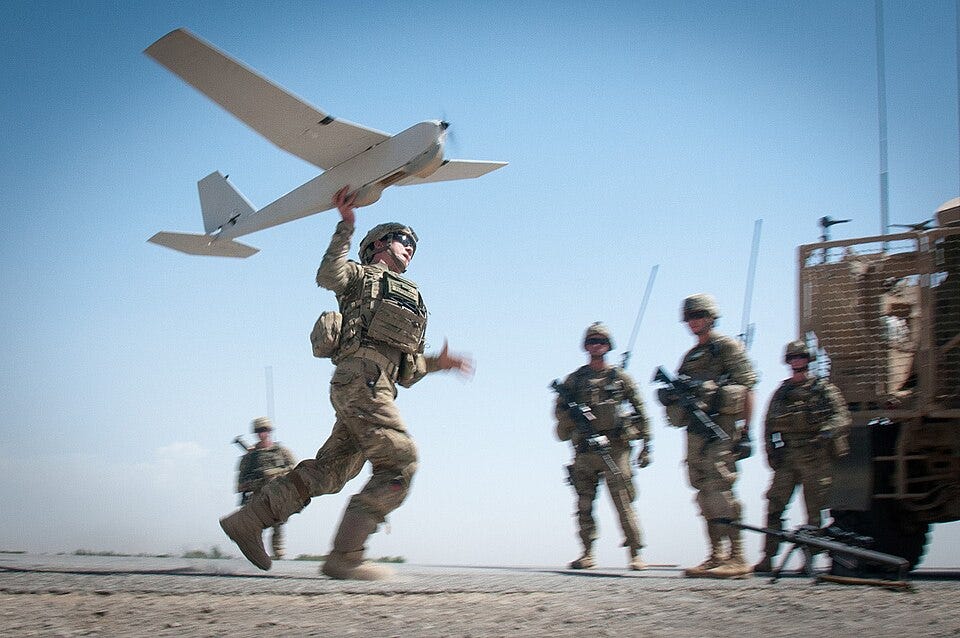
When they actually look like this:
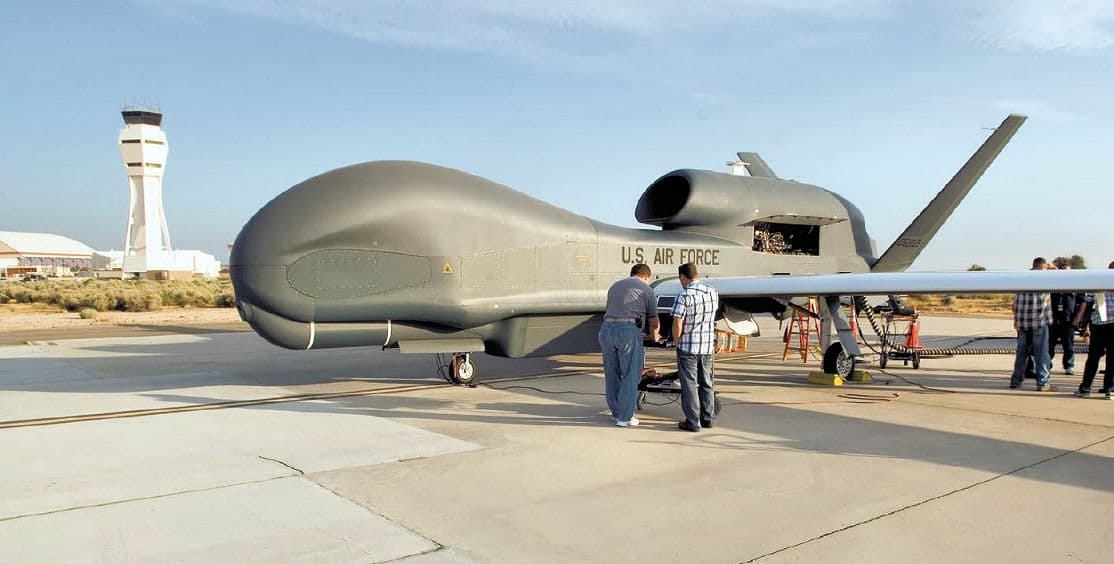
Talking about “drones” is like talking about “floating objects.” Canoes and aircraft carriers both float, but just because you like to canoe doesn’t mean you know anything about aircraft carriers.
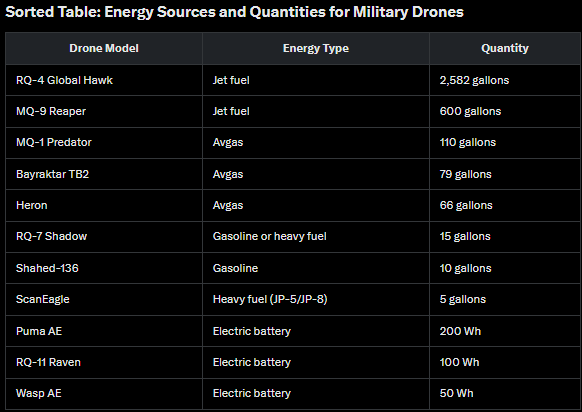
Here’s a list of drones with their fuel type. All the light-weight drones (below 10 gallons) are reconnaissance, not attack drones. The Shahed is the lightest weight attack drone.
10 gallons doesn’t sound like a lot, until you build 4.5 million drones for a relatively limited proxy war in Eastern Europe. A war between America and China might involve 450 million drones per year, which would require10 4.5 billion gallons of oil.
Per day, America uses 20.25 million barrels, so that’s only 1% of America’s oil consumption.11 But this is assuming that all drones are the smallest possible type — unlikely given the long-distance nature of a war between China and America. It would be reasonable to assume that a full-scale war between China and America would demand at least 10% of America’s oil production.12
This is only counting drones, and ignores how much more guzzling is done by tanks and planes. It ignores the increased demands on logistics and transportation and the production of oil-derived plastics. War requires a lot of oil. Nuclear power is terrible for defense, and terrible for offense.
Moving to a nuclear-based economy (65% reliance) would downgrade our oil-producing capacity. It would not be in the long-term security interests of the United States to reduce oil production (or spending on renewables) in favor of expanding nuclear power.
Why use drones instead of nukes?
Why are we even bothering to talk about 20th century technology like planes and tanks? And what is the use of drones, when China and America could just nuke each other into oblivion? Nuclear deterrence works; and if it doesn’t, nothing matters anyway. The world will end, and that’s the end of life on Earth.
Not quite!
The effects of nuclear winter are much like the effects of sea-level rise: overreported to sell copies of An Inconvenient Truth. At most, a full-blown nuclear war would eliminate 50% of the global population. But there would still be 4 billion people left, which is plenty to continue fighting a war.
Most wars end once 10% of the population dies. This is because most wars involve groups of young men killing groups of other young men. When all the young men are dead, the war stops. But nuclear war cannot accomplish this, because it doesn’t discriminate against young and old, male or female.
This is why Israel’s carpet-bombing of Gaza isn’t stopping the war. Even if Israel kills 10% of the population (200,000 people), there would still be enough young men left to pick up guns and continue the fight.
The other way to end a war, other than killing soldiers, is to capture them. This is how Nazi Germany lost WWII — millions of German soldiers fled west to surrender to the allies. This is because the Germans lost access to the Romanian oil fields, which made it impossible to continue the war (no planes, no tanks).
In a nuclear war between America and China, there would be no mass surrender of Chinese or American troops, because nuclear war doesn’t involve any physical meeting on the battlefield. Nuclear war also wouldn’t limit Chinese or American access to any resources. You can’t nuke an oil field, or a lithium mine — you can try, but it’s not a super-effective target.
The most likely target for nuclear attacks is a nuclear power plant. This is because the most crucial resource in a war is energy, and if you can knock out the enemy’s source of energy, you win. This is how WWII was won — not by killing all the German soldiers to the last man, but by draining and stealing their reserves of oil.
Even if you could somehow power a modern military on lithium-ion batteries, it would be smarter to fuel it with wind and solar, since those generators can be dispersed throughout the country, rather than being concentrated in one highly vulnerable, centralized, complicated, vertically-integrated building which can be easily bombed, hacked, or sabotaged.
There’s nothing wrong with marginally supplementing America’s energy production with nuclear, but we already do that. Maximalists who argue that America should replace all hydrocarbons or renewables with nuclear are incurring a security risk that a serious military power cannot afford.
What about Switzerland?
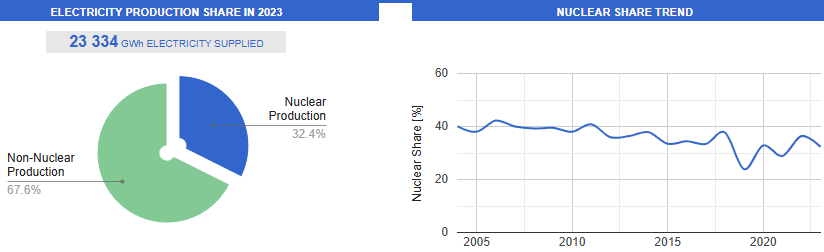
Switzerland is basically the ideal country if you want a test case of what the world would look like in the absence of war. Switzerland hasn’t had a serious war since 1847, which is the best record of peace on planet Earth. If any country should go 100% nuclear, it should be Switzerland.
And yet, since 2004, Switzerland has decreased its reliance on nuclear from 40% to 32%. Not a good case for nuclear maximalism.
You’re cherrypicking!
Am I just cherry-picking the countries that confirm my argument? Let’s look at every single country that uses nuclear power and see what the overall trend is. If the maximalists are right, all countries should be increasing their reliance without any limit.
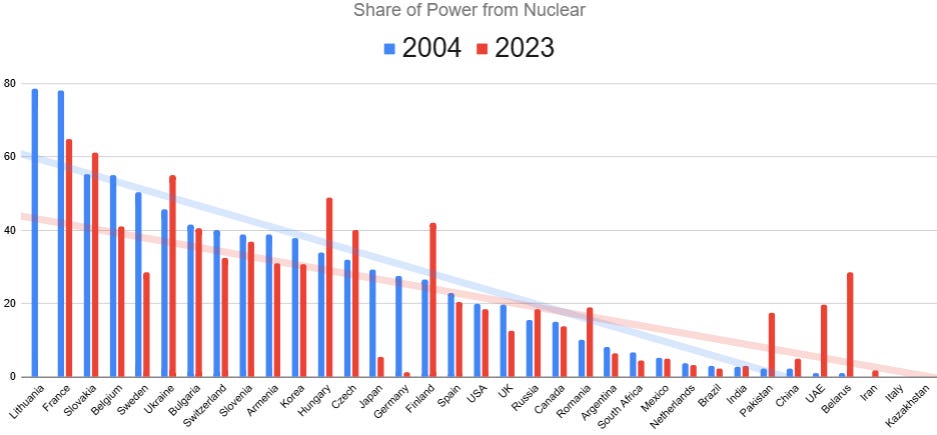
In this first graph, you can see the big increases: Hungary, Czech Republic, Finland, Pakistan, UAE, and Belarus have all significantly increased their reliance on nuclear power.
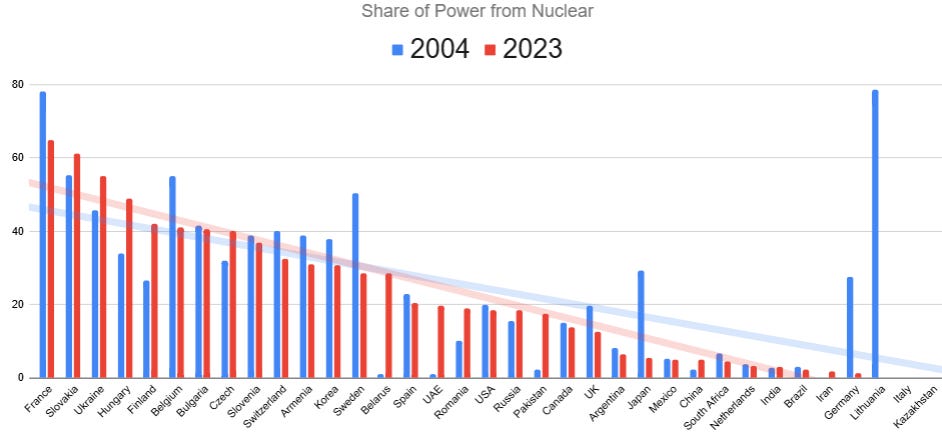
In this second graph, you can see the big decreases: France, Belgium, Sweden, Japan, Germany, and Lithuania.
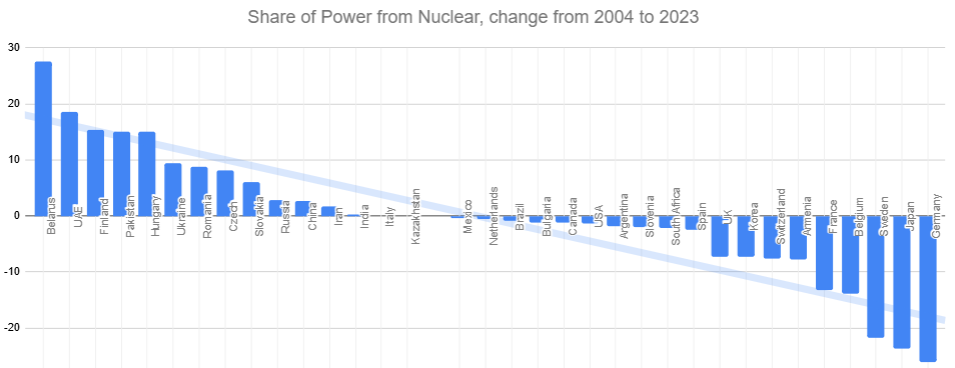
The “based” countries like Russia and China, which have no Green Party degrowther political movements, have only moderately increased their reliance on nuclear power.
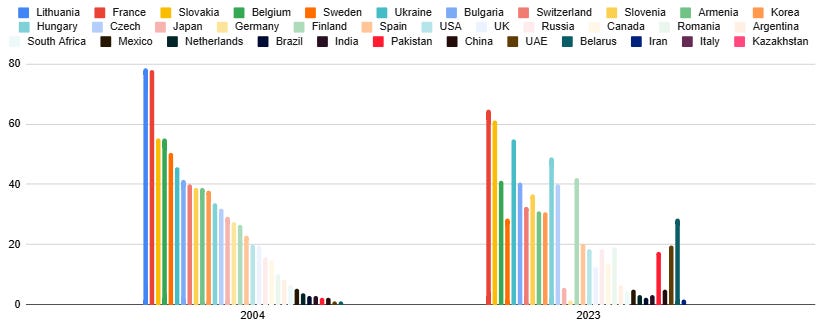
Overall, those who were above 60% reliance have significantly reduced their reliance. Based on the behavior of the biggest adopters, the optimal nuclear reliance ratio seems to be between 20% to 60%.
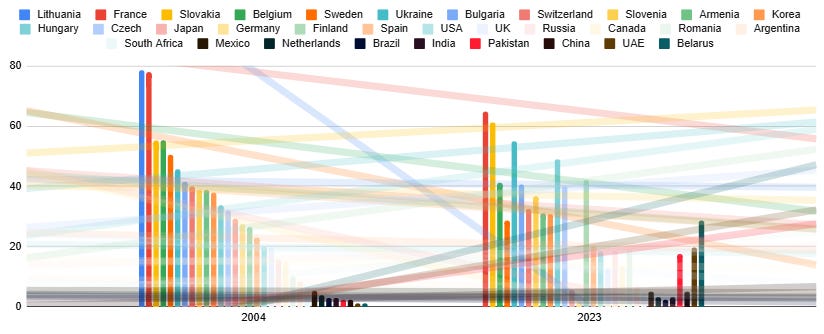
But this still doesn’t tell us what American energy policy should be, because American policy isn’t determined by what is good for Samoa or Macao. Belarus is a satellite state of Russia; the fact that it has built up an enormous increase in nuclear power isn’t evidence that this should be the policy of a sovereign state like America.
Let’s define a “serious country” as a country with a population over 20 million, and focus in on those countries.
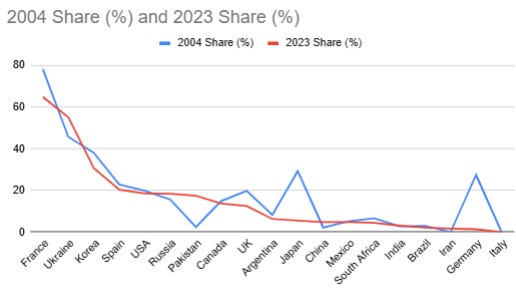
There are large decreases in nuclear reliance in Germany, Japan, and France.
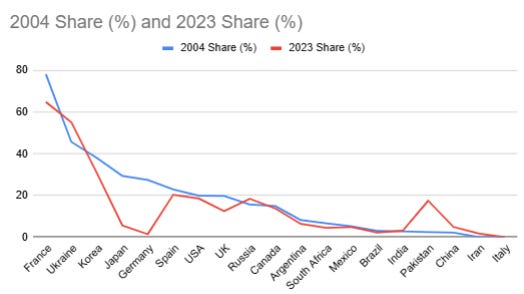
The one big increase among “serious countries” has been from Pakistan.
There are only four “serious countries” out of the 19 “serious” nuclear powers which have nuclear reliance ratios over 20%:
France
Ukraine
Korea
Spain
USA comes in at 5th place.
All four of these have decreased their reliance on nuclear between 2004 and 2023. The argument for America increasing its reliance on nuclear power is not backed up by the behavior of other countries.
Conclusion.
Most online commenters believe that they are smarter than policy makers, legislators, and the Deep State. They believe that democracy is captured by irrational NIMBYs, degrowthers, and safetyist cat ladies. They believe that they are smarter and more rational than the government, and that with “one weird trick,” they can deliver infinite, clean, cheap energy.
I know this to be true, because I was once a young precocious man giving a presentation to his high school physics class on liquid fluoride nuclear reactors. My teacher thought the presentation was cool, but no one else in the class was interested or understood what I was talking about.
To be clear: this was not an assignment or a class project. I simply asked my teacher if I could give a presentation in place of him teaching the class for a day, and he agreed.
So yes, I understand what it is like to think that you are so smart and everyone else is so dumb and if only people would just shut up and listen and maybe put you in charge for a day, then everything would be better, because governments are so irrational and inefficient.
This was the premise of DOGE, and we all know how that is going.
The American bureaucracy isn’t frictionless, because it is weighed down by the collective uselessness of millions of non-productive citizens. But in terms of energy policy, the government basically rational. There is no “one weird trick” that we are missing.
Nuclear is a good technology, but it doesn’t solve all our problems. Increasing nuclear reliance past 20% is risky for security reasons. A massive expansion of nuclear power would not be wise given the long-term risks. Russia isn’t doing it, China isn’t doing it, and we shouldn’t be doing it either.
China is massively incre—
You’re not listening to me. Even if China doubles its nuclear production, it will only have a 10% reliance ratio. That’s half of America.
That’s just because China is poor! If it were rich like us, it would build a lot more!
This isn’t true. China’s infrastructure production capacity is better than America’s. There’s nothing China can’t build if it wants to build it.
Just wait and see, China is currently building—
No, I’ve already posted the chart of China’s plans for nuclear expansion.13 Despite the fact that China’s population is 4x as big as America’s, its total projected nuclear production — once all planned projects are completed — still comes out to less than America’s current production levels.
If you think that the Chinese government is rational and smart, and
If you think that the Russian government is rational and smart, and
If you think that the 13% reduction in French nuclear reliance means anything, then
You should be highly skeptical of nuclear maximalism. It would not be a good idea to build “hundreds of new nuclear plants to gain access to infinite, free, cheap, clean, limitless energy,” as nuclear maximalists suggest. These are not people interested in geopolitics, cyber-security, or great power conflict. If you really want to worship the French and copy everything they do,14 we should be reducing our reliance on nuclear, not increasing it.
Now that I have triggered HUNDREDS of fanatical nuclear maximalists, I will leave you with some nuance:
America has oil, sunny deserts, and windy plains. France has less of those things. Therefore, it makes sense that France is going to have a higher nuclear power reliance than America.
If you really think that American regulators and policy makers have worms for brains, and Russia and China represent the “adults in the room,” then I propose the following policy: if Russia or China plan additional nuclear capacity, America will match their reliance ratio, thus making sure we don’t fall behind in nuclear production.
As nuclear gets smaller, smarter, and cheaper, nuclear power will be more secure and less risky. The “micro-reactors” in nuclear submarines are great for military applications, but are not yet ready to be installed in your local neighborhood. In order for “micro-reactors” to be fit for public use in power stations, we need to innovate cheaper fail-safe mechanisms to counter sabotage, theft, and terrorism.
Maybe someday we will even have cold fusion reactors, which could totally change the game and make nuclear reactors useless pieces of junk that will all need to be scrapped and rebuilt.
Nuclear energy is still clean, cheap, and abundant. Also, flying cars are real. But we shouldn’t eliminate regular cars in favor of flying cars. We also shouldn’t scrap hydrocarbons or renewables in favor of nuclear maximalism. Sorry to burst your bubble.
The BBC cites a study claiming that 115,000+ long-term deaths can be attributed to Chernobyl. The number of immediate deaths was 30. I’m using 4,000 as a moderate estimate between these two extremes. My point here is that nuclear power is physically safe — 4,000 isn’t a lot of people compared to deaths to air pollution.
UNICEF estimates that 8.1 million people die from air pollution. The causes were “burning of fossil fuels and biomass in sectors such as transportation, residential homes, coal-burning power plants, industrial activities, and wildfires.”
Why bother to go through all the effort and risk when you can simulate Grand Theft Auto nuclear terrorist acts in virtual-reality from the comfort of your own home?
To steelman the nuclear maximalists, I include Ukraine in this analysis, even though it isn’t technically in NATO.
Keep in mind that I excluded non-nuclear NATO members from this analysis, whose reliance on nuclear energy is 0%.
You could argue this is presently happening in the context of the War in Ukraine, but NATO is simultaneously strengthening alongside German re-armament, so it’s not nearly as bad as if NATO collapsed entirely.
If you actually are reading through all the footnotes, that probably means you are a very thorough reader and I would like to reward you with a discount off my paywalled content. We love our thorough readers.
This kind of conspiratorial thinking reminds me of the vaccine mandates. The idea was that western woke NPC zombies were following the orders of Anthony Fauci and Bill Gates, whose job was to vaccinate as many white babies as possible to usher in white genocide. Meanwhile, based China and based Russia were… also… mass… vaccinating? But somehow, those vaccines were BASED and definitely didn’t cause autism, while American vaccines were CRINGE and would literally KILL you.
Furthermore, without getting too conspiratorial, it is not out of the question that Bulgaria was “encouraged” by the EU to sell off its rotting equipment to Ukraine at a “charitable” price, e.g., the EU stole the equipment from Bulgaria to gift it to Ukraine. No direct evidence for this, but it is a possibility to consider.
at minimum (assuming one single flight per drone)
Given the higher fuel demands of the average-sized drone being an order of magnitude higher than the Shahed.
Please, I beg you, read before hitting the comments section.
(you dirty Francophile!)
"They’ve spent too much time consuming both NATO and Russian propaganda, which falsely portray the war as “total” in scope."
Russian propaganda certainly does not present the war as total. On the contrary, it presents the war as limited. With few exceptions, the word "war" is avoided in official Russian statements, it is called "Special Military Organization" to emphasize the limited nature (with the underlying threat that the SMO could be upgraded to a full war).
As far as Switzerland is concerned, the main reason why it is hardly contemplated to increase the share of nuclear energy to French levels (it had been decided that no new NPPs would be built in Swii, but it is likely that this will be changed so that there is the option to replace old NPPs in the future) is that there is a lot of baseload and often storage capable hydro power (many large dams in the mountains). Of course, these large dams would even more vulnerable in wars than nuclear power plants, and the destruction of dams would lead to vast destruction in significant areas - compared to large scale hydro power, nuclear energy is hardly particularly risky. In the case of Switzerland, that is hardly a very part of the consideration (even though Switzerland has many military installations, especially in the mountains, had quite a significant army during the cold war - now, the Swiss army is small in percentage of GDP terms, but since Switzerland is rich, in absolute terms, it is still significant for a small country, but even though there are many plans for crises of all kinds, an all-out war with bombing dams and NPPs is hardly a scenario considered likely).
Your argument has been exactly my position for as long as I can remember, so you score high on the one-item intelligence test (the extent to which you agree with me), ha-ha.
Seriously, you have apparently been very smart all of your life. How many high school physics students volunteer to give a talk on liquid fluoride nuclear reactors? Okay, so maybe you were naive in thinking it was the "one weird trick" cure-all. Pushing ideas with heart-felt commitment is, as far as I can tell, the way that science achieves progress. We do not have to perfect our ideas inside of our own heads before throwing them out there into the marketplace of ideas. If Mercier and Sperber (https://pubmed.ncbi.nlm.nih.gov/21447233/) are correct, what typically happens is that we submit our pet ideas to our audience with the deck stacked in favor of our ideas and allow the intelligent reasoning power of our community to scrutinize our what we have put out there.
Isn't that kind of the way blogging works?