
why kids are unhappy
(it’s not the phones)

I have cancer. Because I am undergoing surgery, everything I post from here on out is going to be unedited.
Eventually I will recover. Until then, I apologize for the decline in quality.
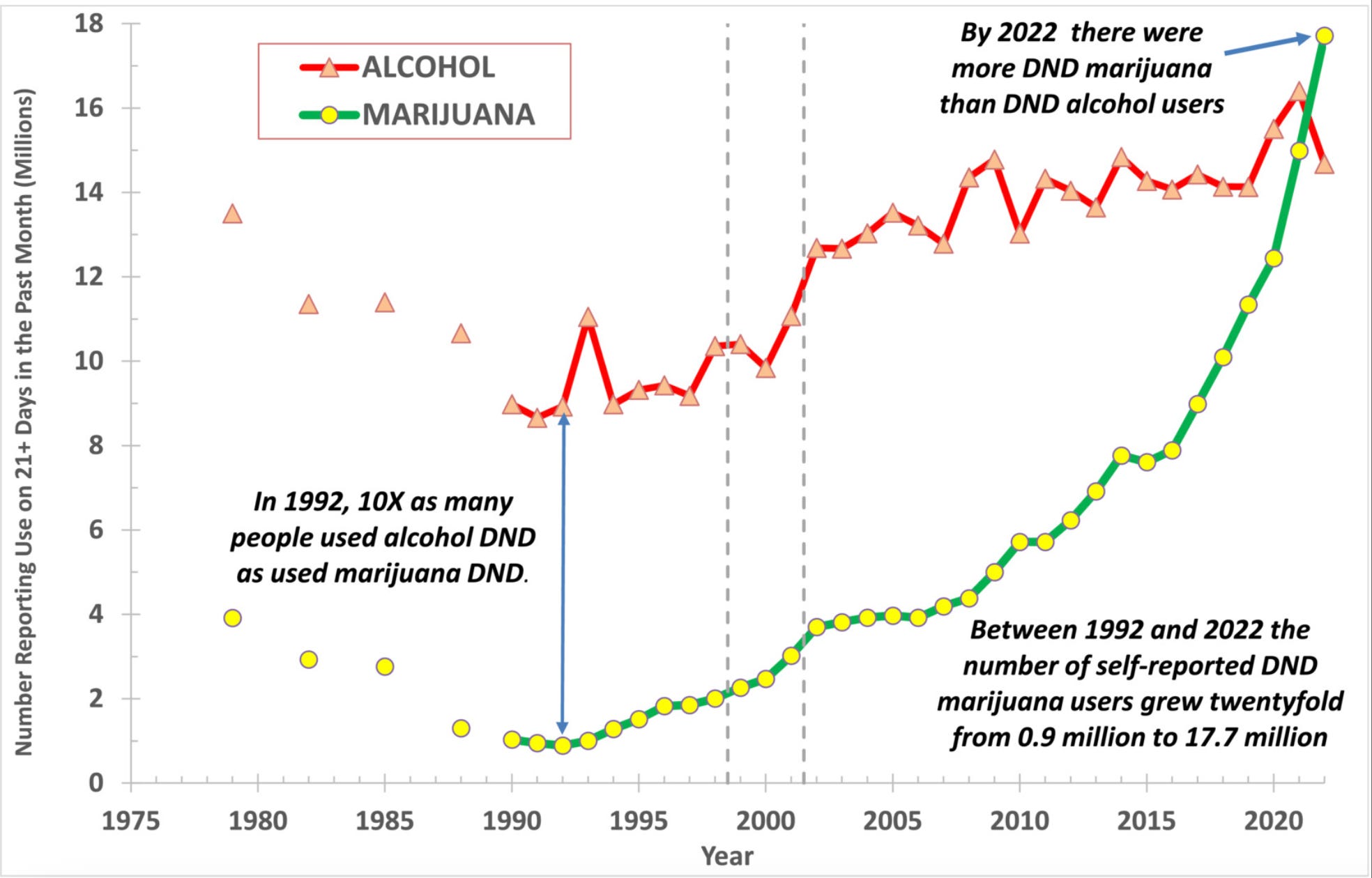
Look carefully at this graph. What do you see?
1992 was the best year in American history:
We won the Cold War. China was a non-entity.
There were no transgenders or intersectionality or land acknowledgements.
Bill Clinton promised a war on “super predators” and border security.
But Reagan Republicans were pro-amnesty!
A majority of Democrats opposed gay marriage. Political polarization was low.
99% of Americans had never used “internet at home.”
Phones were attached to your wall, not an endless source of distraction and misery in your pocket.
Drug use was at an all-time low.
Whether any of these things are causally related, I do not know. Maybe it’s all just one big coincidence that 1992 was the happiest year in American history. Looking back on it, it seems like a paradise — besides the fact that inner-city crime was nearing all-time highs.1
Today I want to focus on one simple thesis: that teen happiness follows a simple 13 year delay from drug use.
The Math
In 1992, drug use was at an all time low. If you were coming of age in 1992, your life trajectory would be radically improved! Without the influence of drugs or alcohol, you make better choices, work harder, and have a more stable and secure life. That makes things better for your children.
The time period when people get hooked on drugs and alcohol is between ages 14 and 24. If you avoid drugs during that period, you’ve avoided 90% of the risk. But if you pick up a bad habit during this “young adult” period, it’s hard to kick later on.
The 1992 generation, which was 14 to 24 during this period, had kids of their own. These kids then turned 13 between 2005 to 2015. We remember those years as “the golden years” of teen happiness, because those kids were raised by relatively drug-free parents.
After 2008, however, life took a turn for the worse. The 2008 generation was exposed to higher rate of drug and alcohol use.2 Parents after 2010 were consuming a lot more drugs and alcohol than parents in 1992. The result is that teens in 2026 are miserable.
Drugs are fun when you’re the one using them. However, when you’re a small child, and your parents are using drugs and alcohol, that is not fun. It is disturbing, unnerving, and alienating. It chaos, disorder, and neglect, a daily betrayal of duty.
Drug-addicted parents are more likely to be physically, emotionally, and verbally abusive; they are less capable of providing economically; they have a higher risk of divorce. If your parents are drunk or high all the time, everything gets worse.
It’s no wonder that these kids are addicted to their phones: they’re trying to distract themselves from an extremely depressing situation.
Twenge and Haidt blame the phones. But this is backwards: phones allow kids to cope with a desperate situation. Taking phones away isn’t going to solve their depression.
The good news is this: teen alcoholism is going down.
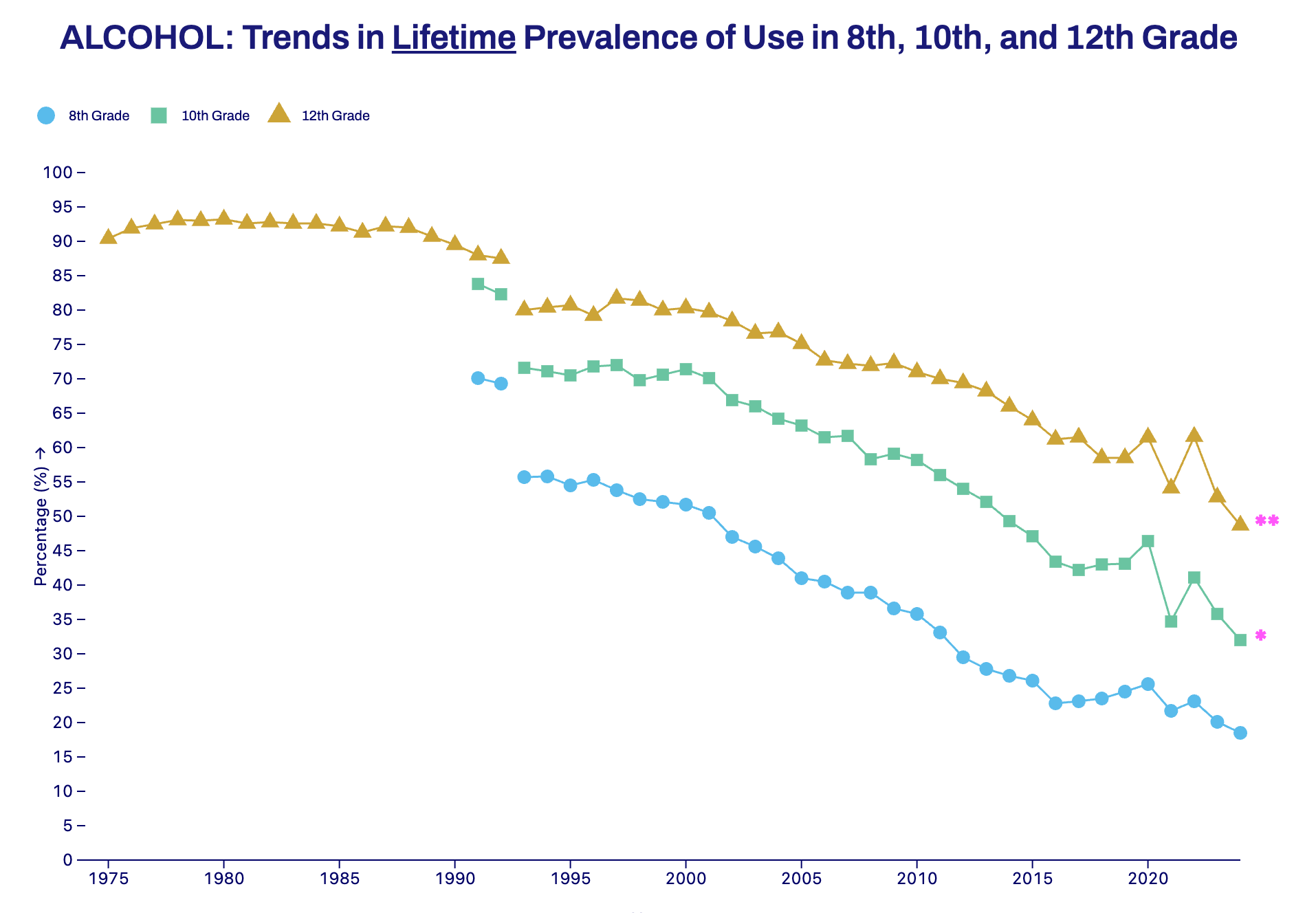
Gen Alpha teens seem to be partying less. We can make fun of them for not being risk takers, but the ultimate effect of this trend is that kids in the 2040s are going to be much better off then kids in the 2020s.
Conclusion
Drugs are bad. They provide short term gains, but create long-term harm for children. Marijuana should be heavily taxed, as should alcohol.
I am in favor of effective prohibition. Obviously I would not support any ineffective law — basically, I am in favor of whatever legal regime lowers alcohol and marijuana use as much as possible. If that’s taxation, or bans, or a “war on drugs,” I’m in favor of that, after accounting for negative externalities (costs). I say effective prohibition, because I’m aware that some laws against drugs are not effective at deterring use, and create more harm than good.
Teen happiness is a simple function of parental drug use. In 2005, parents were less likely to be on drugs; in 2026, they are much more likely to be on drugs, by a factor of 2x for alcohol, and by a factor of 9x for marijuana.
I am in favor of legalizing many drugs, like peptides, and cocaine, because I don’t think these drugs cause as much problems for kids. If you want to ban something, don’t ban phones, ban the source of the problems: ban the booze and the weed.
Or maybe the oppression of trans people and marginalization of black voices was a sin crying out to heaven. Maybe the country was suffering under the crushing weight of racial homogeneity. Maybe Zionist imperialism reigned unchecked, totally ignored by the passive consumerist public. Maybe America was sleepwalking into disaster precisely because the year 1992 was hollow and empty.
Whether this was due to the economic downturn, or the decline of religion, or some invisible third thing, the results are clear.