
The tragedy of therapy.
mourning, loss, and the meaning of family.

Four articles I read today:
And now for my commentary:
1. Vegetarians, spam, spite programming, and drug names
shorts, by Dynomight
In the 20th century, communists and internationalists made several attempts to invent artificial languages to communicate more effectively across cultural lines. These attempts failed. However, in drug names, it seems like artificial languages have succeeded.
“Most generic drug names work like this. The formula is some random-cool-sounding letters at the start, followed by a meaningful structured suffix. For example, the “-ib” suffix indicates small-molecule inhibitors.”
Unfortunately the US refuses to standardize (surprise surprise):
“Inevitably, older drugs often don’t stick to the rules and the US has it’s own standard for drug names which is almost but not quite the same as the international / WHO standard.”
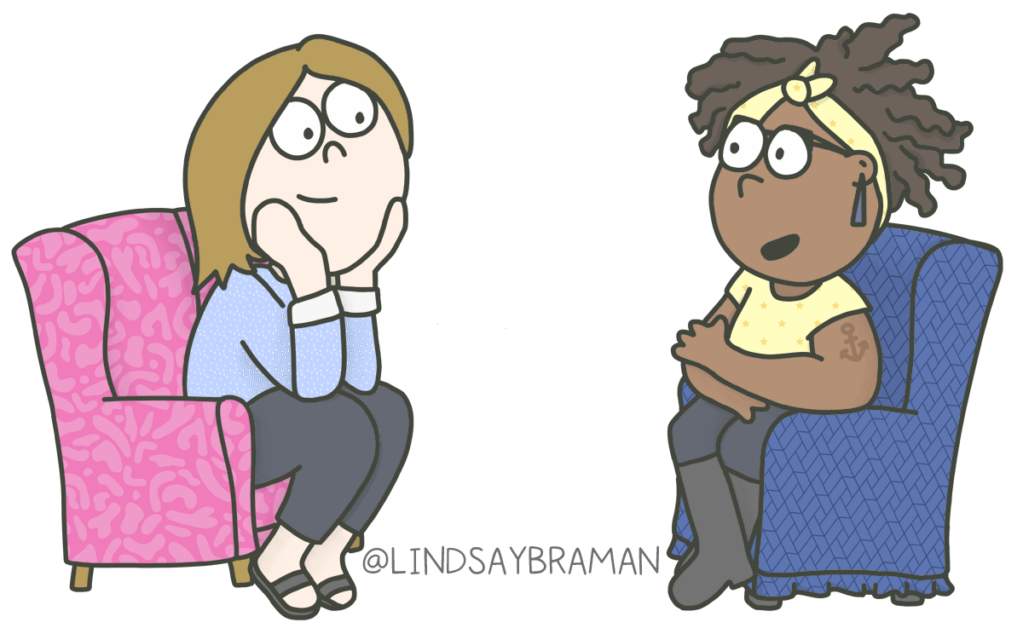
2. Therapists Are Not Parents
Are we simulating family?, by Freya India
This is an article I wish I wrote, because it’s a topic that deserves attention, and I disagree with Freya at some points. But it’s a hard one to write, because there are so many potential pitfalls. Freya is also an excellent writer and her style exceeds mine.
Why do we now need therapy? Why are we experiencing a national mental health crisis? Is it the phones? Social media? Capitalism? Fascism? Wokism? Transgenderism? The collapse of Christianity?
“This is happening, I suspect, because of family breakdown... the decades-long collapse of the family. Divorced parents, single parents, overworked parents. Shrinking and strained and scattered families... they are simulating family, with therapists... someone to talk to, to rely on. Of course some young people need serious therapy. But I think many more need parents.”
“The assumption today is that it’s healthy to rely on experts, unfair to rely on family. Which is why we have a constant cry for more mental health funding and better access to resources, but barely anything for defending families, for expecting parents to stay together or spend more time with their children; that would be backward... We are warned against codependent families while we are encouraged to call and text therapists and trust everything they say.”
I entirely agree with Freya that therapy culture is frightening and tending toward a scam, milking problems rather than solving them. In some cases, we don’t need a solution: we need a process for coping. Therapy is a process, sure, but is it a good one?
Where I disagree is in the idea that the solution is “more family time” or “defending families.” I am on board with the Victorian model of parenting: spend as little time with your kids as possible. Instead, send them off to boarding school. Hire a nanny. Let them sleep over their friend’s house.
This doesn’t mean that parents or shouldn’t spend time with their kids, just that time in itself is not a solution. The problem isn’t “insufficient parenting time,” the problem is “lowered parenting quality.” The decline in parenting quality can be attributed, in part, to a rise in drug addiction. But there are probably other factors as well.
One factor is that, in the past, people were more violent. Violence is a coping mechanism. It was more common for men to hit their wives, and for parents to hit their children. As violence has declined, problems haven’t disappeared. I’m not saying that violence is the answer, but that it is one particular coping mechanism. When violence recedes from the picture, the same problems persist, just in other forms. So instead of talking about kids getting beat up by their parents, we talk about... some amorphous and ambiguous concept like “lower quality parenting.”
This reminds me of the problem of corruption. Corruption is a function of IQ. Does that mean that stupidity literally causes corruption? Plausibly, yes. But we can all imagine a smart person who is also corrupt, so intelligence is not necessarily protective against corruption.
Are parents becoming dumber? Perhaps, to an extent, a decline in certain forms of intelligence is occurring. Alternatively, it is not a decline in intelligence, but a decline in emotional stability. That would then either be downstream from genetic changes (mutational load theory) or cultural changes. I prefer the cultural model, because changes in genes do not happen as fast as we are perceiving.
Cultural changes causes real trauma and stress. Nationalists try to insulate the population from these changes, although that comes with its own set of costs.
Ideally, I would like to see people having more freedom to insulate themselves from cultural changes. However, freedom starts within. For example, if you feel like pornography is “destroying the family,” stop watching porn. If you feel incapable of doing this, instead of banning porn for the whole country, why not start an intentional community where porn is banned? A town-wide or even city-wide ban on porn seems feasible. “In this city, we don’t have porn.”
People over-interpret the first amendment. It should not limit the power of cities. It is a limitation on the federal government to establish a federal religion. But if a city wants to be Catholic, I don’t see a problem with that. I prefer a patchwork model.
If the Amish community does a better job, let them do it. If Catholics want to start a town, let them do it. I object to the idea that we need to “defend the family” at a national level, but I embrace the idea of conservatives getting together on a local level and insulating themselves from modernity.
There are two problems with nationalism:
It benefits free riders. If porn is bad, and you ban porn for everyone, then the people with the worst impulse control benefit. If you limit the porn ban to self-selected communities, then this anti-McGenic effect is ameliorated.
It assumes homogeneity. Maybe porn destroys some people’s sex lives, but enriches others.
“So no, I don’t believe the answer is as simple as more mental health awareness, more resources, more funding. I don’t think it’s more experts who are more and more available. I think it’s parents trying harder to stay together and to stick around.”
I totally agree with the first two sentences; I resolutely disagree with the third sentence. The reason why parents are worse at parenting isn’t because they aren’t “trying hard enough.” That’s like saying “Gen Z isn’t trying hard enough.” Collectivizing parents and shaming them for their parenting skills is not a solution.
The problem isn’t insufficient effort -- it’s insufficient ability. Parents have declined in quality due to increased drug use and cultural trauma. There is no “national solution” to these problems. If there is a solution, it is local and community-based. Join a church, or invent a church, and buy property, and live alongside like-minded people.
3. Review: Can we avoid another financial crisis? (Steve Keen)
Private debt to GDP ratio as the doom metric, by Emil O. W. Kirkegaard
Emil presents a problem by quoting Keen:
“William Gorman, argued that it was ‘intuitively reasonable’ to make what is in fact an absurd assumption, that changing the distribution of income does not alter consumption: ‘The necessary and sufficient condition quoted above is intuitively reasonable. It says, in effect, that an extra unit of purchasing power should be spent in the same way no matter to whom it is given’”
Emil then adds his own commentary:
“it’s rather obvious that income distributions change consumption patterns. If you are living on the brink of starvation, you don’t buy a luxury car.”
Here is my interpretation:
Assume you have a population of Kirkegaard clones split into two countries: a capitalist one, and a monarchist one. In the capitalist country, there are 1,000 Kirkegaards, each of whom can afford to buy exactly one luxury car, because they are all highly productive and earn high incomes. In the monarchist country, 999 Kirkegaards live in poverty, but King Kirkegaard owns 1,000 luxury cars. Thus, despite a change in the distribution of income, the overall consumption remains the same. Total consumption is determined by total GDP.
Of course, strictly speaking, this is not true. For example, in the case of a tanning salon, a rich person could not consume 1,000x as much tanning services. Therefore, when it comes to healthcare, changes in income equality really do change consumption patterns. But when speaking of broader and less specific economic products like “industrial output,” then the heuristic becomes less scary.
4. American Dreamland
the first message of 2026, by Katherine Dee
Often times when I read things written by older men, I think to myself, “are you my father?” There was a mismatch in my life, where my father was quite an intellectual, but he was absent. What I had instead was a different kind of father figure, who I am sure would have been perfect for another boy. But I never got *my* father. And he expressed that to me: he wished he had *his own son.* He emailed it to me.
Sometimes, when I think about an old email from a decade ago, or more, I wonder if I’m inventing false memories, like a dream. But even if it were a dream, it would be a true dream: it would tell me exactly what I suspected all along, that just as a stepfather can never be a real father, a stepson can never be a real son.
I don’t have a sister. Sometimes I hear WBE talk about his sister. Recently he said that, after he rugpulled some crypto investors, someone anon texted him and threatened the life of his sister, using her real name. It’s moments like that when I’m glad I don’t have a sister. I don’t understand how, emotionally, he can handle such things.
A few years ago, back during COVID (wow, 6 years, I guess more than a few) I used to receive regular death threats. What upset me most was when he threatened not me, but my friend, and not just my friend, but my friend’s wife. I don’t need to get too much further into the particulars.
I suppose this guy was taking trolling to its logical conclusion. If the purpose of trolling is to make people feel bad, why not? There were no consequences. What was I going to do -- call the police with screenshots of some anonymous chatter?
Call me crazy, but there’s something heroic about being killed by a troll. Sort of like how Steve Irwin died, being stung by a sting ray. Occupational hazard. Bad ass. But trolls bringing family into it is very disturbing to me.
No matter how much I might hate someone, I’ve never thought of hurting that person’s family.
This is my strange and morbid way of saying: although I am the opposite of a family man, and although my connection to the outside world is strained, and although I am hyper-online and literally typing this from inside a 6 foot by 3 foot closet (I guess I find it cozier than the bedroom itself), I really view family as something sacred.
I will not have a family because family comes from community. Men don’t love women, and women don’t love men, but rather, love comes from cupid, and it infects us from the outside. Marriage is a communal concept, not an individual one. I have affection for women, and lust, and I have a desire for attention and approval, but these things don’t add up to family or marriage. Family is religious and mystical. It doesn’t need to be Christian, but it is supernatural -- beyond logic or rationality.
When a family member dies, all of this becomes obvious. In death, love is made real and pure, sharp and cutting, unavoidable and undeniable.
When my great aunt died, I had dreams about her. Somewhere I might have them tucked away in some dream journal, but for now they are a memory of a memory. But they had an entirely different quality from “normal” dreams.
When I speak of the supernatural I am not proposing any logical mechanism, but speaking of the psychological. I still have Rudolf Otto’s “idea of the holy” opened in a tab, waiting to read it. I know it’s important, this idea, but... I’ve been neglecting it...
Perhaps I avoid the idea of the holy because it is frightening. How far it is, and yet how close. Far, in the sense of the unattainable. Close, in the sense of... the inescapable, the intimate.
It is not moral, but it has some relationship to morality.
It is frustrating, because I operate on the belief that, through my intellect, I can conquer everything. If I were just smart enough, I could solve everything. But intellect cannot approach holiness. It is humbling. But it doesn’t make me purely passive -- it impresses upon me a great duty and a longing. If I were to look straight at it, to confront it, to grapple with it, to seek it... Could I survive?
If there were a genie, and it offered me this wish, “you will fear no more,” would I take it? My first thought is that I would do something stupid and dangerous and die. I’m afraid of losing my fear. Fear protects me. To even talk about this seems circular and avoidant. I can say it out loud, “I am over intellectualizing something which is beyond the rational in an attempt to overcome it and never truly deal with it” -- but it’s too self-referential.
It’s 7:58am and morning light moves softly with the shadows of leaves on the closet door.
On parents, I think it’s systemic, but that the effect that dominates is one that has stemmed from egalitarianism and improving living standards.
Fifty years ago, the mother stayed home because of course she did. Many women got pregnant; the pill was just being introduced; sex -> children; mothers would all go over to one another’s houses to let all their children play together, which was an excuse to stop watching them, get adult time, sew something, have tea, do social adult things.
At the same time, the opportunity for women to work and earn has increased over time. Now you can earn a terrific living much more easily.
So where before there was a pool of talented, interesting people who had the ability to organise quilting bees, bake cakes, sew a costume for Halloween and just generally improve the world by exercising their exceptional talent - which they did as mothers, but it’s just talent so they can also use it to make money - now that community is gone and so with talent draining out of the mother space, quality of parenting declines.
I think these structural, systemic influences dominate the relatively smaller effects of drugs, although I do think that the rise in autism diagnoses is because children are dysregulated by having parents who are absorbed in a screen, and this screen thing may have some effect on parent quality.