
Less Privacy; More Mercy

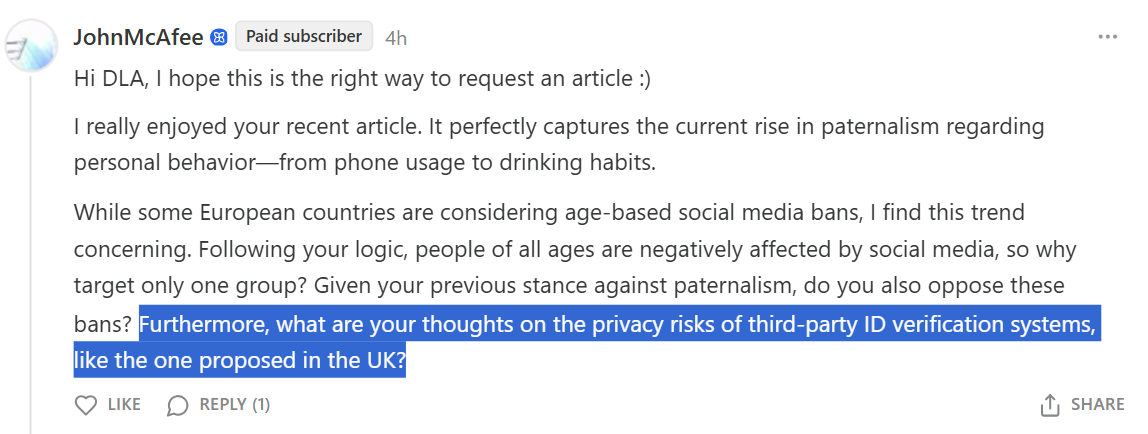
I am against privacy. But I am in favor of mercy.
Mercy isn’t the same as apathy. I am a judgmental person. I do not want to be forced to live around criminals, slobs, or ugly people. But people who make mistakes should be given as many chances as possible to rebuild their lives abroad.
I am completely against the idea of prison. Prison is an evil concept. The only reason to keep someone in a prison is if you are seeking to ransom them. For example, in a war, you take prisoners so that, at the end of the war, you can swap them for prisoners that the other side has taken. But if someone commits a crime, there is almost never (in 99% of cases) a good reason to keep them in jail.
In this sense, I am in favor of the most forgiving possible justice system. But I am against privacy.
The right to privacy is often defended as a way that the individual can escape the all-consuming Leviathan of the state. I view this as a superficial means of guaranteeing the freedom of the individual.
Let’s imagine, for example, that Trump, tomorrow, declared that he was president for life, and he began arresting Democratic politicians. What would you do? A conservative would cheer — a liberal would consider whether or not we must kill them.
If you’re a liberal, I do not see how “a right to privacy” would be helpful here. If we enter civil war territory, the gloves are off. Neither side will play fair.
If you really want to ensure the ability of citizens to rebel against the government, you should focus your time on supporting 3D-printed guns, the right to own machine guns, and the right to use encrypted chats like Signal, or the Tor Network. “Privacy” is not very helpful in this case.
Personally, I’m not very interested in any of those things, but I’m just making the case that “the right to privacy” seems like a poor hedge against tyranny. Libertarians should focus on developing ways to ensure privacy through cryptography, rather than asking the government “nicely” to “respect my rights.”
What if we had no privacy?
Let’s say that someone secretly records what I say, and then publishes the secret recording. The effect might be that my reputation is destroyed. Personally, I do not see this as something that the state has an interest in preventing with “privacy laws.”
Similarly, if my nudes get released, again, I do not see state intervention as useful. Why?
Well, call me a conservative, but perhaps society’s right to assign reputational harm to individuals is… neutral, or even positive. If people act like evil assholes in private, and they are exposed, well, it is what it is. If people are sluts, and they get exposed, well, actions have consequences.
For example, when The Amazing Atheist had nudes of him released involving a banana, I was disgusted, but I didn’t then say, “whoever released that should go to jail.” Similarly, I don’t think the person who released Glenn Greenwald’s nudes should go to jail.
Obviously if someone uses AI to generate false images or voice recordings, that is fraud and slander, and we should punish people for lying.
I just see no good reason to ever protect anyone’s privacy.
Exception: Celebrities
I do believe that following someone around and taking pictures of someone is a form of harassment. I believe all paparazzi deserve the death penalty. Celebrity culture is evil. Taking pictures of a famous person without their consent should be considered an act of terrorism.
By famous, I would mean that they have over a million followers on social media.
I have never been famous, so I have never had to deal with this problem, but I can imagine how torturous it is to have paparazzi taking pictures of you everywhere, all the time, at the beach, in your own home.
Benefits
If we had no privacy, everyone’s medical records would be public. This would be a huge benefit to science. We would all be healthier and spend less on healthcare as a result.
If we had no privacy, genetic sequencing would be cheaper, and again, it would produce huge benefits in science.
If there was no privacy, then the prostitutes mentioned in the Epstein files wouldn’t be censored, which would help us dismiss their claims more easily.
How does this affect me personally?
If every private conversation and image of me were compiled into a “worst of the worst” document, it would look bad and I would be embarrassed. If this sort of thing happened all the time, maybe I would be more mindful and act in a more dignified way. However, any apology that I issued would be coerced by the mob.
We should be merciful to anyone whose bad behavior is suddenly “exposed.” Yes, people are hypocrites. But it is better to be a high-functioning hypocrite than a low-functioning vegetable. People make mistakes.
The problem with protecting privacy is that it has real costs. It retards science; it hides truth; it complicates the transparency of legal proceedings.
Ideally, we should be maximally forgiving, and also have minimal privacy.
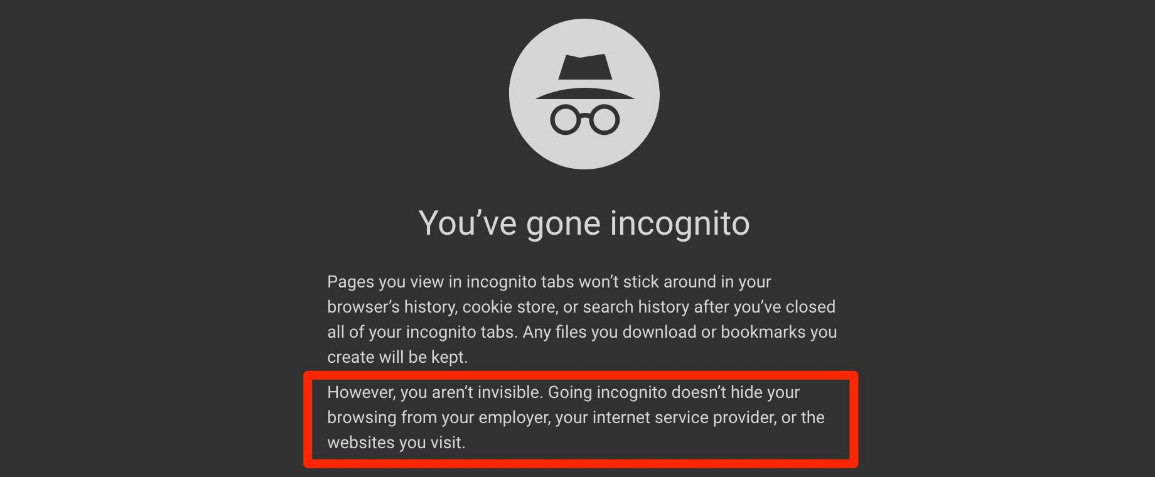
Any information that you sent before 2019 is possibly compromised, because that’s when https was made mandatory. All your porn browsing, for example, could end up being part of a hacked data leak, and released to the public.
The government already has backdoors in all sorts of “private messaging” services. All text messages you’ve ever sent are being combed through by AI for the juicy bits.
I understand why people find this disturbing, and again, I would not come out looking like an angel if I was subjected to a data leak, but this isn’t a good place for government regulation.
Mostly what I’m afraid of is that old associates would come out of the woodwork to slander me.
In 2022, or there abouts, a few deranged individuals came to me and asked me to publish an “expose” of a person that they hated. Now, to be clear, I had bad blood with this guy. However, I considered their request to be fundamentally dirty and pathetic.
Whether we’re talking about pornography, adultery, lying, cheating, stealing, whatever, most crimes committed do not make a person’s existence a net negative. Murder is exceptional, because it creates mutual exclusivity — you are negating another person’s life, and all the value and love they have to give.
But let’s say that my gay lover cheated on me, he lied to me, and he stole $500 from me. Should I dedicate resources to “exposing” him? I think not.
First of all, I should consider how and why I came to choose him as a partner. Many people choose evil partners because they themselves are sick and they secretly want someone to punish them. Yes, I do blame the victim in these cases.
Criminals deserve much less punishment than we give them. At the same time, I am fully in favor of increasing segregation. If someone commits a crime, I do not believe they should be allowed to enter a city. Banishment is a reasonable punishment.
But developing a “dossier” on people and “exposing them” is not a net positive in most cases.
Unfortunately, the government doesn’t actually protect us against this behavior. If my gay ex-lover publishes a Substack article entitled, “Deep Left Gave Me AIDS,” I have very little recourse against him. Theoretically, I could sue for slander, but his is difficult and the effort to do so would be an additional punishment for me.
If my gay ex-lover instead publishes an article entitled, “Deep Left is a Toxic Liar Hypocrite,” I have no recourse at all, because I can’t even sue for slander. These claims are so vacuous that it’s impossible to fight in court.
Conclusion
Privacy laws do not protect people’s reputations against the mob. This is regrettable, but we live in an evil world.
I would much prefer that we strengthen slander laws than privacy laws. Many good men have their lives ruined by their gay ex-lovers, and this is cruel and unfair.
I would go so far as to say that we should assign harsher penalties against slandering anyone that you have had a consensual sexual relationship with. Since we’ve basically abolished traditional marriage (for better or worse), it would be nice to have stronger protections (mostly for men) against female gossip.
Having this norm where men who fuck a girl then have to worry about being dragged 20 years later is anti-sexual and anti-love. Let peopel be imperfect, allow them to make mistakes, and be forgiving. Holding a 20 year grudge isn’t the sign of a “victim,” it’s the sign of a resentful bitch.
In the name of mercy, move on. Let success be your revenge.
People who make false rape accusations should also be punished more harshly than men who commit rape. This is because false accusations not only destroy a man’s reputation, but they also decrease the likelihood that real victims will be ignored or doubted.
Do paparazzi still deserve death in the world with no privacy? Or do they only deserve death because their photos are an unfair reduction of privacy? Or is the harassment aspect the significant part unrelated to privacy?
Also: stop me if you've heard this before, but there's this other guy promoting benefits of experiencing omniicient all-forgiving.